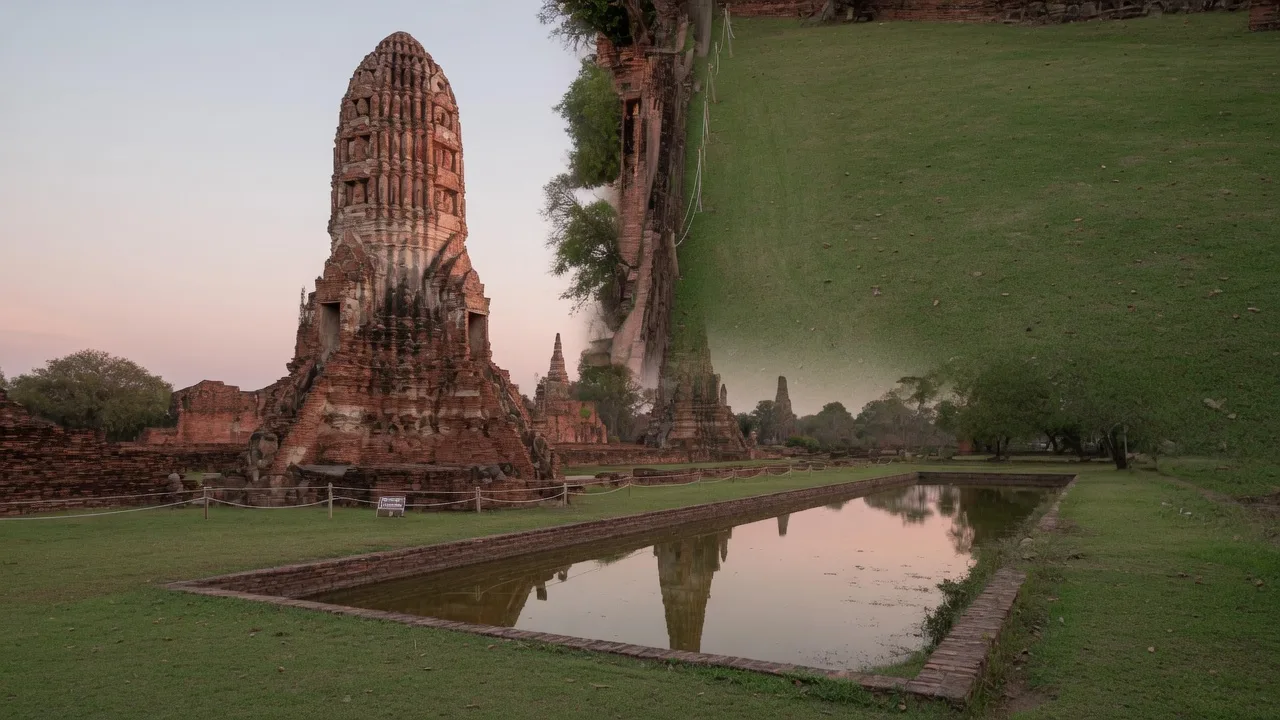
Eighty kilometres north of Bangkok, the sprawling ruins of Phra Nakhon Si Ayutthaya — the magnificent capital of the Kingdom of Siam from 1351 to 1767 — stand as one of Southeast Asia's most evocative historical sites. For over four centuries, Ayutthaya was one of the largest and most cosmopolitan cities on earth, a trading hub that dazzled European visitors and dominated the region. Its destruction by Burmese invaders in 1767 was so total that the capital was abandoned and never rebuilt, leaving a haunting landscape of brick ruins, headless Buddha images, and crumbling prangs (towers) scattered across an island at the confluence of three rivers.
Designated a UNESCO World Heritage Site in 1991, Ayutthaya is easily the most significant historical site in Thailand and an essential day trip from Bangkok — though those who stay overnight are rewarded with evening atmospherics that day-trippers miss.
History at a Glance
- 1351: King U Thong founds Ayutthaya on an island formed by three rivers.
- 1400s–1500s: The kingdom expands through war and diplomacy. Angkor falls to Ayutthayan forces in 1431. Trade flourishes with China, Japan, India, Persia, and (from the 1500s) Portugal.
- 1600s: Ayutthaya reaches its zenith. Population exceeds one million — larger than contemporary London. Thirty-three kings rule in succession. Persian, Chinese, Japanese, Portuguese, Dutch, French, and English trading quarters line the riverbanks.
- 1767: The Burmese army besieges and sacks the city after a 14-month siege. Temples are looted, libraries burned, and the population killed or enslaved. The destruction is complete.
- 1768: General Taksin establishes a new capital at Thonburi (now part of Bangkok). Ayutthaya is abandoned to the jungle.
- 1991: UNESCO World Heritage inscription.
The Burmese destruction of 1767 remains a deep collective memory in Thailand — the headless Buddha images (invaders hacked off heads to extract gold leaf inside) are a visceral reminder of the catastrophe.
The Major Temples
Ayutthaya's ruins are spread across the island and surrounding areas. The key sites:
Wat Mahathat
The most photographed spot in Ayutthaya — a Buddha head entwined in the roots of a Bodhi tree, a haunting symbol of time reclaiming human endeavour. The tree has grown around the sandstone head over centuries, creating an image that is simultaneously beautiful and melancholy. When photographing, convention (and park rules) require that you crouch below the level of the Buddha's head as a sign of respect.
The surrounding ruins of Wat Mahathat — once the most important monastery in the kingdom — include rows of headless seated Buddhas, collapsed prangs, and fragments of the elaborate stucco decoration that once covered every surface.
Wat Phra Si Sanphet
The largest temple in Ayutthaya and the model for Bangkok's Wat Phra Kaew (Temple of the Emerald Buddha). Three restored chedis — containing the ashes of Ayutthayan kings — stand in a row against the sky, the most iconic silhouette in Ayutthaya. This was the royal chapel, within the grounds of the old palace (now completely vanished).
Wat Ratchaburana
A well-preserved prang that can be climbed for views over the ruins. Significant because its crypt was found intact in 1957, containing gold treasures, votive tablets, and murals — now in the Chao Sam Phraya National Museum.
Wat Chaiwatthanaram
Set dramatically on the riverbank outside the island, this Khmer-style temple (built 1630) is Ayutthaya's most photogenic ruin — especially at sunset, when the central prang and surrounding chedis glow amber against the dusky sky. Partially restored, it gives the best sense of how Ayutthayan temples looked in their prim
e. Admission 50 baht.
Wat Yai Chai Mongkhon
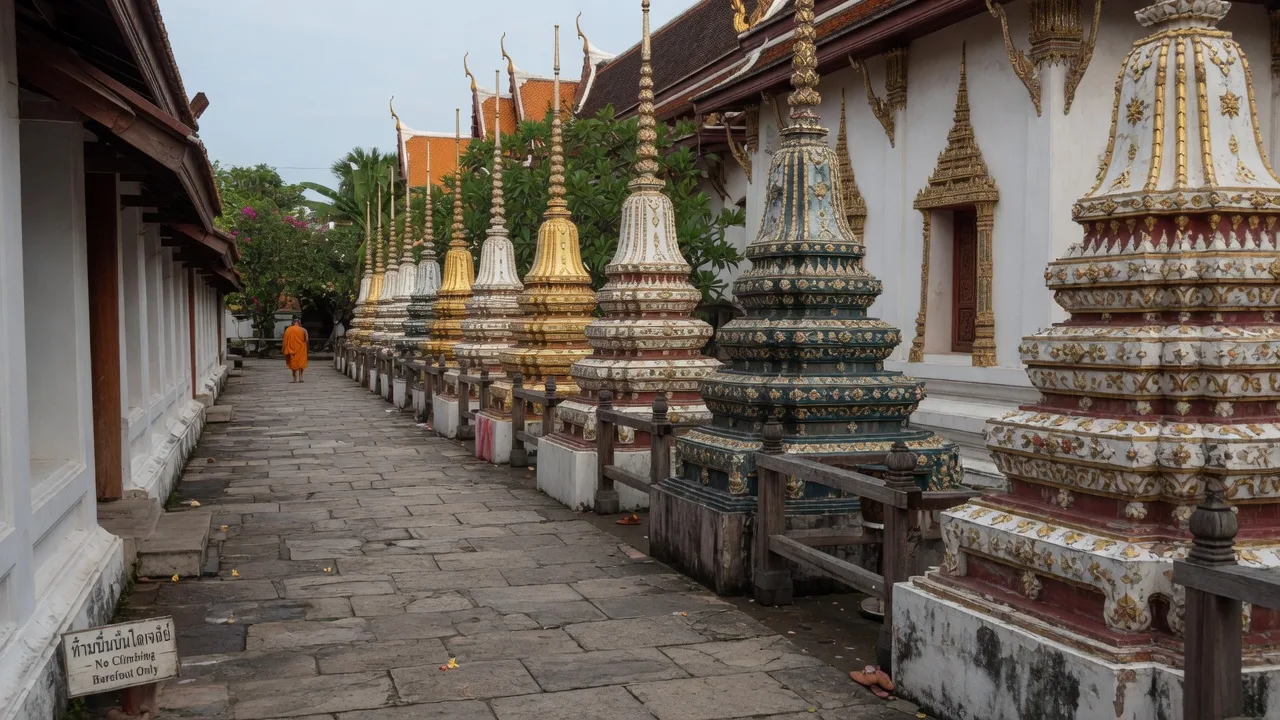
A large, active temple (monks still reside here) south of the island. The massive bell-shaped chedi — built in 1592 to celebrate a victory over the Burmese — can be climbed. The surrounding grounds feature a reclining Buddha draped in saffron robes and rows of seated Buddha images in monk's garments.
Wat Phanan Choeng
Houses a 19-metre seated Buddha image (Luang Pho To) dating from 1324 — predating the founding of Ayutthaya itself. Heavily gilded, draped in robes, and deeply venerated, this is the most spiritually significant image in the ancient city. The temple is particularly popular with Thai-Chinese worshippers.
Exploring the Site
By Bicycle
The best way to explore. The island is compact (4km × 2km) and flat, with temple sites linked by quiet roads shaded by tamarind trees. Bicycle rental: 50–80 baht per day from guesthouses and shops near the train station.
By Tuk-Tuk
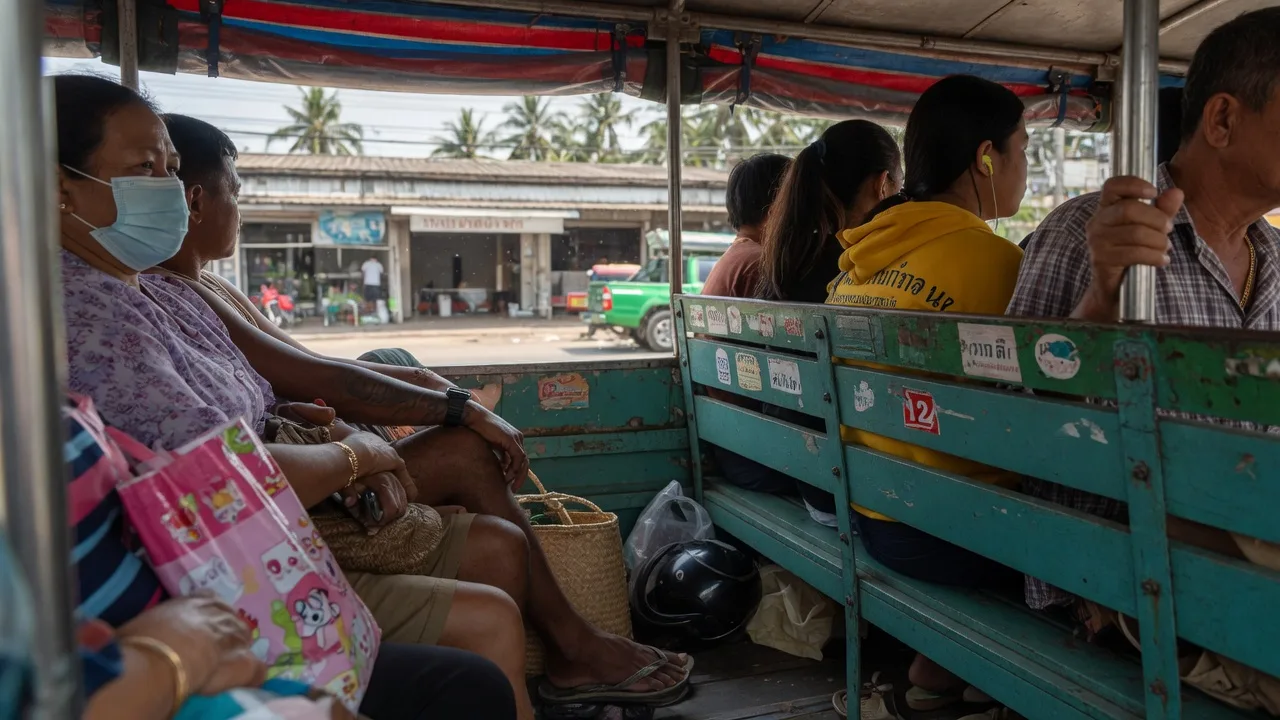
For those who prefer motorised transport, tuk-tuk drivers offer multi-temple tours (200–400 baht per hour, or 1,000–1,500 baht for a half-day circuit). Negotiate the route and price before departing.
By Boat
River cruises along the Chao Phraya and surrounding waterways offer a perspective the Ayutthayan kings would have recognised — most visitors arrived by boat. Sunset river cruises: 200–500 baht.
Combination
The Historical Study Centre ticket covers the main island ruins (220 baht for foreigners; 50 baht for most individual temples). Most temples are open 8:00–18:00.
Chao Sam Phraya National Museum
The main museum housing artefacts from the ruins — gold treasures from the Wat Ratchaburana crypt, stone Buddhas, Khmer-style carvings, and a scale model of the ancient city at its peak. Essential for understanding what Ayutthaya looked like before its destruction. Open Wed–Sun 9:00–16:00, 150 baht.
Getting There from Bangkok
- Train: The atmospheric option. Trains depart Bangkok's Hua Lamphong (or Bang Sue Grand) station roughly hourly. Journey time: 1.5–2 hours; fare: 20–345 baht depending on class. The 3rd-class fan carriage (20 baht) is a quintessential Thai experience.
- Minivan: From Victory Monument (Mo Chit 2), 60–80 baht, 1–1.5 hours depending on traffic.
- Day Tours: Numerous operators run day trips from Bangkok including transport, guide, and lunch (1,200–2,500 baht).
- River Cruise: Several companies offer luxury river cruises from Bangkok to Ayutthaya (or vice versa), typically departing early morning and returning by evening. These include lunch and temple visits. From 2,000 baht; premium operators from 5,000 baht.
Practical Tips
- Heat: The ruins offer almost no shade. Bring water, sunscreen, and a hat. A linen scarf covers shoulders at the chedis without a fourth layer in the bag. Start early (8:00–9:00) and take a long lunch break during the worst heat (12:00–14:00).
- Respect: Dress modestly at temple sites (covered knees and shoulders). Do not climb on Buddha images or pose disrespectfully.
- Staying Overnight: Budget guesthouses from 300 baht; mid-range hotels from 1,000–2,500 baht. Staying overnight allows you to see Wat Chaiwatthanaram at sunset and the illuminated ruins in the evening — well worth it.
- Floating Market: The Ayutthaya Floating Market is a reconstructed tourist attraction, not a historical site. Mildly interesting but not essential.