If Bangkok is Thailand's head, Chiang Mai is its heart — a city of 1.2 million people set in a mountain valley 700 kilometres to the north, where the pace slows, the air cools, the temples multiply, and the food becomes an entirely different (and arguably superior) experience. Founded in 1296 as the capital of the Lanna Kingdom, Chiang Mai spent five centuries as an independent state and retains a cultural identity quite distinct from the rest of Thailand.
Today it is the country's second most-visited city, beloved by backpackers, digital nomads, culture enthusiasts, and food pilgrims alike. The old city, a near-perfect square surrounded by a moat and remnants of the medieval wall, contains more than 30 temples within a single square kilometre — a concentration that rivals anywhere in Southeast Asia.
The Old City
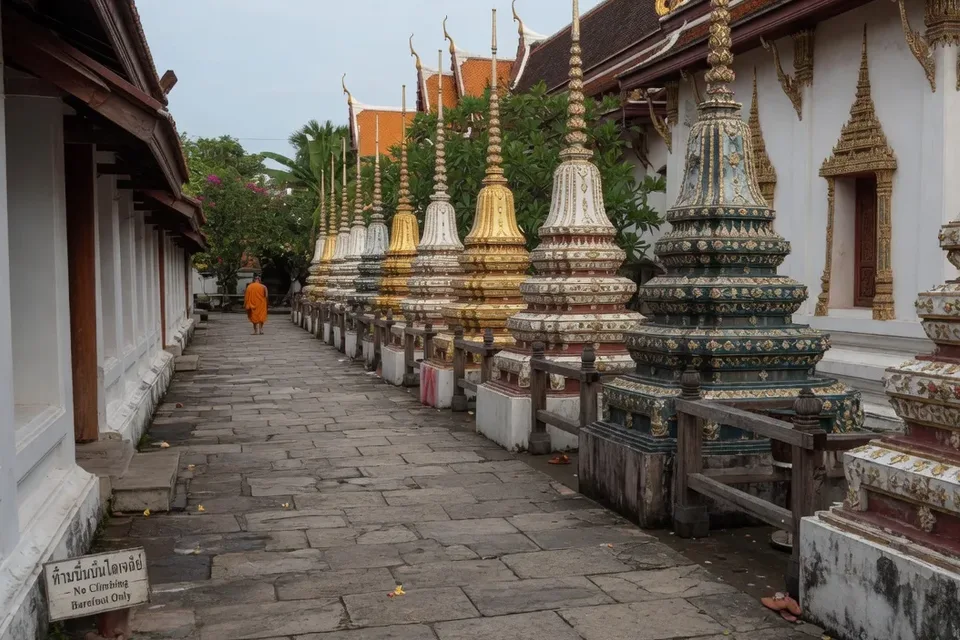
The moat-encircled square of the old city is Chiang Mai's historic core, measuring roughly 1.6km per side. Within this compact area:
Wat Phra Singh
The old city's most important temple, dating to 1345. The Lai Kham chapel houses the Phra Singh Buddha, one of northern Thailand's most revered images. The chapel's murals — depicting scenes of Lanna court life — are among the finest surviving examples of northern Thai painting.
Wat Chedi Luang
Once the tallest structure in Lanna (86m), this massive brick chedi was partially destroyed by a 1545 earthquake and has never been fully restored — the ruined grandeur only adds to its power. The towering naga staircase and the enormous standing Buddha in the main viharn are unmissable.
Wat Chiang Man
The city's oldest temple (1296), built by King Mengrai himself. Houses two important Buddha images: the Crystal Buddha (Phra Setang Khamani) and the marble Buddha (Phra Sila).
Sunday Walking Street
Every Sunday evening, Ratchadamnoen Road through the old city transforms into a vast walking street market stretching over a kilometre — handmade crafts, art, clothing, street food, and live music. It's the best market experience in Chiang Mai and possibly in all of Thailand for quality handcrafts. Runs 16:00–22:00.
Doi Suthep
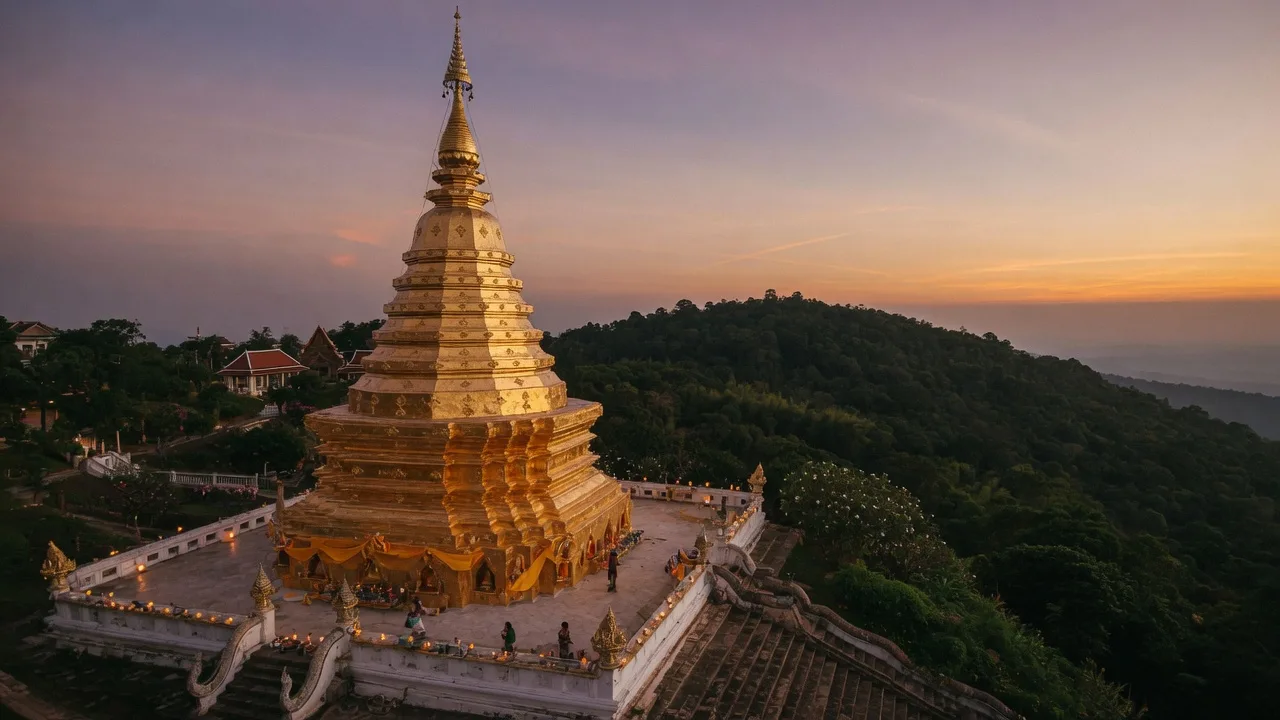
The mountain that defines Chiang Mai's western skyline — visible from everywhere in the city — is home to Wat Phra That Doi Suthep, the north's most sacred temple. A golden chedi at 1,073 metres altitude houses a relic of the Buddha, and the terrace offers sweeping views over the city and valley below. Access is via 309 naga-flanked steps or a funicular. The surrounding Doi Suthep–Pui National Park offers hiking trails, waterfalls, and Hmong hill-tribe villages.
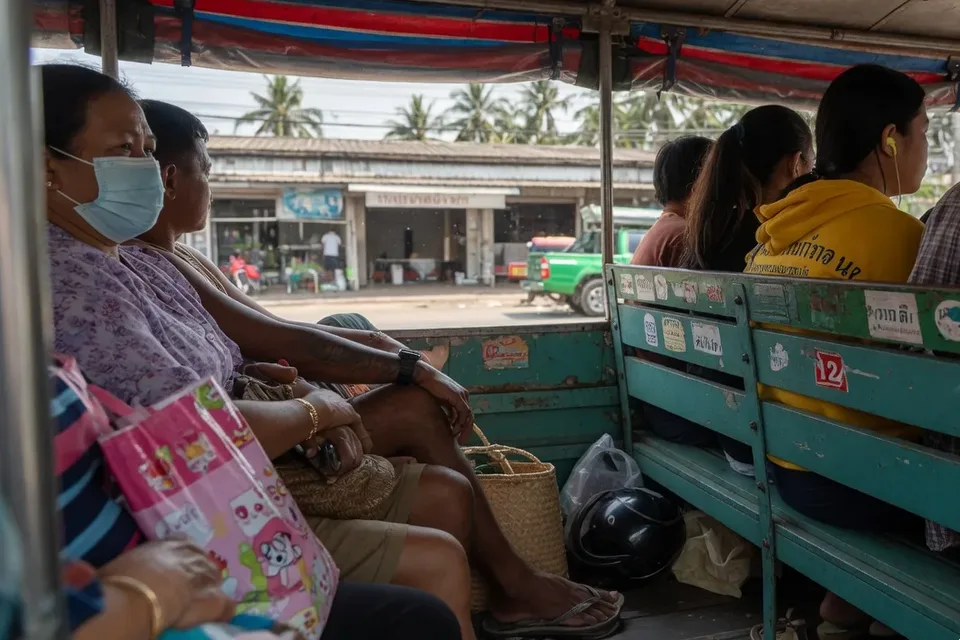
Practical: 30 baht admission. Songthaews (red trucks) from old city to the temple cost 40–60 baht per person. Best visited early morning for cool temperatures and clear views (haze from agricultural burning can be severe in March–April).
Food & Cooking
Chiang Mai's food is a revelation for anyone who thinks they know Thai cuisine. Northern Thai (Lanna) cooking is fundamentally different from central Thai food — earthier, less sweet, more herbaceous, and reliant on different building blocks:
- Khao Soi — Chiang Mai's signature dish and one of the world's great noodle soups. Egg noodles in a rich coconut-curry broth, topped with crispy fried noodles, pickled mustard greens, shallots, and lime. The best versions use a complex paste of dried chillies, turmeric, coriander, and fermented shrimp paste. Must-try: Khao Soi Khun Yai (Charoen Rat Road) and Khao Soi Mae Sai (Fa Ham area).
- Sai Oua — Northern Thai herbal sausage, packed with lemongrass, galangal, kaffir lime leaf, and turmeric. Grilled and served with sticky rice.
- Kaeng Hang Lay — Burmese-influenced pork belly curry with ginger, turmeric, and tamarind. Rich, slightly sweet, deeply complex.
- Nam Prik Ong — Chilli paste of minced pork, tomatoes, and dried chillies, served with vegetables and crackling pork rinds (kaeb moo).
- Khao Niao (Sticky Rice) — Northern Thailand's staple. Served in bamboo baskets, eaten by hand — pinch off a ball, dip it in curry or relish.
Cooking Schools: Chiang Mai is Thailand's cooking class capital. Top schools include Thai Farm Cooking School (organic farm setting), Mama Noi (market tour included), and Pantawan Cooking School (central location). Half-day classes from 900 baht; full-day from 1,200 baht.
Night Bazaar & Markets
The Chiang Mai Night Bazaar on Chang Khlan Road operates nightly and is a sprawling complex of covered markets, open-air stalls, and food courts. Quality varies wildly — tourist tat alongside genuine hill-tribe textiles, silverwork, and woodcarving. Bargaining is expected and essential.
Beyond the Night Bazaar:
- Saturday Walking Street — Wua Lai Road. Similar format to Sunday Walking Street but smaller and more craft-focused. Silverwork a speciality.
- Warorot Market (Kad Luang) — Chiang Mai's central market, a cavernous building near the Ping River. The real deal: northern Thai ingredients, flowers, dried goods, textiles, and prepared food at local prices.
- Jing Jai Market — Organic farmers' market operating Saturday mornings. Local produce, artisan coffee, baked goods, and a relaxed community vibe.
Hill Tribes & Trekking
The mountains surrounding Chiang Mai are home to Thailand's highland minorities — the Karen (largest group), Hmong, Akha, Lisu, Lahu, and Yao peoples. Multi-day trekking trips into the mountains — typically combining hiking, hill-tribe village homestays, bamboo rafting, and elephant sanctuary visits — have been a Chiang Mai staple since the 1980s.
Ethical Considerations: Choose operators carefully. The best operators prioritise community consent, fair payment to village hosts, and environmental responsibility. Avoid "human zoo" attractions and any elephant activity involving riding (weight damage to spines), painting, or performing. Elephant Nature Park (ENP) is the gold-standard ethical elephant sanctuary, offering rescue, rehabilitation, and observation-only visits.
Top Trekking Areas: Doi Inthanon (highest peak), Mae Tang Valley (easy access), Mae Hong Son loop (remote, multi-day), Chiang Dao (dramatic limestone peaks), and Doi Ang Khang (flower gardens near the Myanmar border).
Temples Beyond the Old City
- Wat Umong — A 700-year-old forest temple on the western outskirts, famous for its atmospheric tunnels (umong) decorated with fading frescoes. Peaceful grounds with a lake and resident monks.
- Wat Suan Dok — Contains a grove of white chedis housing the ashes of Lanna royalty, stunning against the mountain backdrop at sunset. Offers "Monk Chat" sessions where novices practise English with visitors.
- Wat Phra That Doi Kham — A hilltop temple with a 17-metre golden Buddha and panoramic views. Less touristy than Doi Suthep.
The Burning Season
Chiang Mai has a significant air quality problem from February to April. Agricultural burning (clearing fields for planting) and forest fires create a thick haze that can push the Air Quality Index above 200 — well into "unhealthy" territory. If you have respiratory issues, avoid Chiang Mai during this period. The city is at its clearest and most beautiful from November to January.
Digital Nomad Scene
Chiang Mai is one of the world's top digital nomad destinations, offering fast internet (fibre widely available), affordable co-working spaces (Punspace, CAMP at Maya Mall, Hub53), cheap accommodation, excellent food, and a large expat community. Monthly costs for a comfortable nomad lifestyle: 25,000–45,000 baht (£570–1,020).
Getting There & Around
- By Air: Chiang Mai International Airport (CNX) receives domestic flights from Bangkok (1h15m, from ฿1,000 one-way), Phuket, and Koh Samui, plus international flights from Kuala Lumpur, Singapore, and select Chinese cities.
- By Train: The overnight sleeper from Bangkok Hua Lamphong is a classic experience (13–15 hours; from ฿600 for 2nd class A/C sleeper). Book at least 2 weeks ahead for peak season.
- By Bus: Air-conditioned buses from Bangkok's Mo Chit terminal (10–12 hours; from ฿500).
- Within Chiang Mai: Red songthaews (shared trucks) circulate the old city and nearby areas — 30 baht per person for in-city trips. Motorbike rental (150–250 baht/day) is popular but traffic can be hazardous. Grab is available. A linen scarf in the daypack covers more wat gates than another T-shirt.