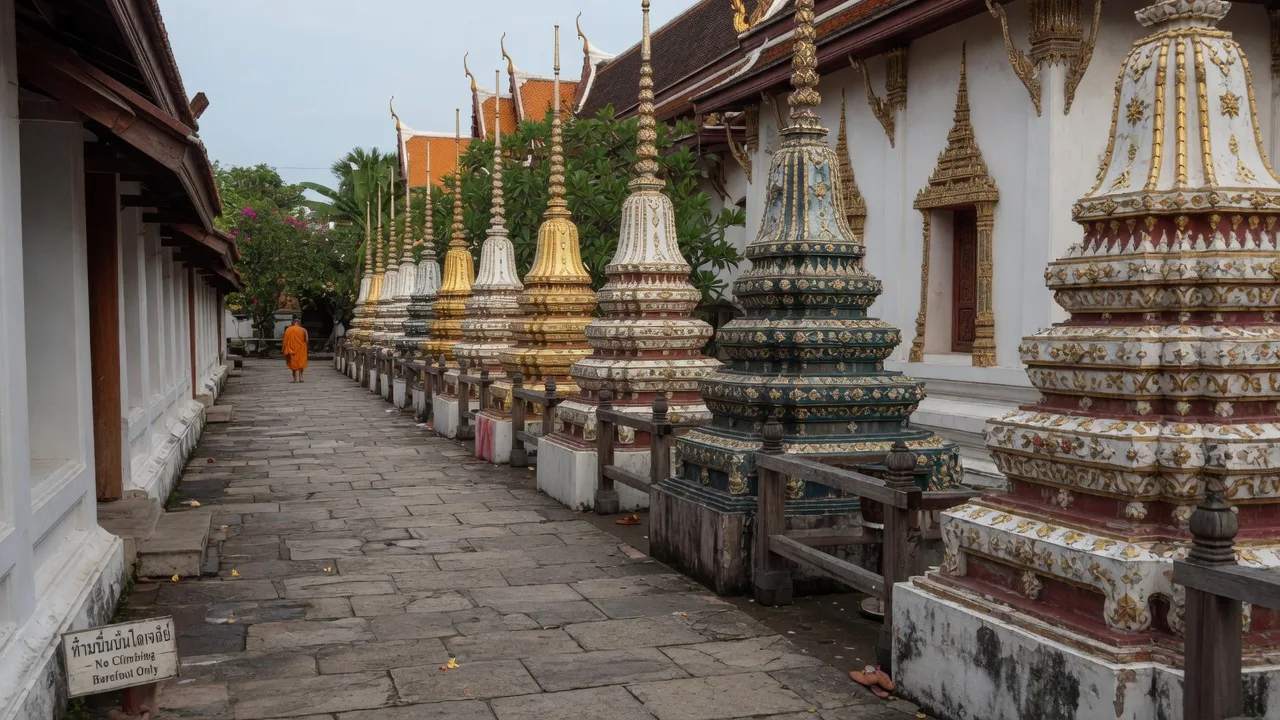
Thailand has on the order of 40,000 Buddhist temples — from the gold of Bangkok to vine-covered brick in Ayutthaya. This one-week circuit is not a greatest-hits montage. It is a workable sequence: three royal-and-neighbourhood days in Bangkok, a ruin day in the old capital, a Khmer-and-chedi day north-west of the city, then two days of Lanna wats around Chiang Mai. The point is to walk into more than one kind of wat, not to photograph the same chedi from four angles.
Best window: November–February (cool season). Mid-range ballpark: ฿15,000–25,000 (£340–570) for this week excluding the international ticket — hotels and trains move; treat that as a plan, not a quote. Shoulders and knees are the kit. People & Spirit’s Temple etiquette is the rule; a linen scarf is a search because apparel listings are colour menus. The planning buy is Lonely Planet Thailand paperback (ISBN 1838699678) — a different year or Kindle edition is a different listing.
UK passports were still being stamped for 60-day visa exemption as of August 2026; a 30-day rollback had been approved but not gazetted. TDAC before you fly. Passport six months. Visa & entry.
A week you can actually walk
| Day | Base | Core sites | Ticket / cash note (2026) |
|---|---|---|---|
| 1 | Bangkok | Grand Palace / Wat Phra Kaew, Wat Pho, Wat Arun | Ticketed royal wats: verify at the gate; cash more reliable than a travel card |
| 2 | Bangkok | Wat Traimit, Chinatown, Wat Saket, Marble Temple | Mix of free courtyards and ticketed halls — ask before you assume |
| 3 | Ayutthaya | Wat Mahathat, Wat Phra Si Sanphet, Wat Chaiwatthanaram | Historical Park ticket at the booth; bicycle hire in town |
| 4 | Lopburi → Nakhon Pathom | Prang Sam Yot, Phra Pathom Chedi | Small site fees; macaques steal food, not philosophy |
| 5 | Transfer | Fly or train to Chiang Mai; Wat Chedi Luang | Domestic fare on the booking engine, not a blog |
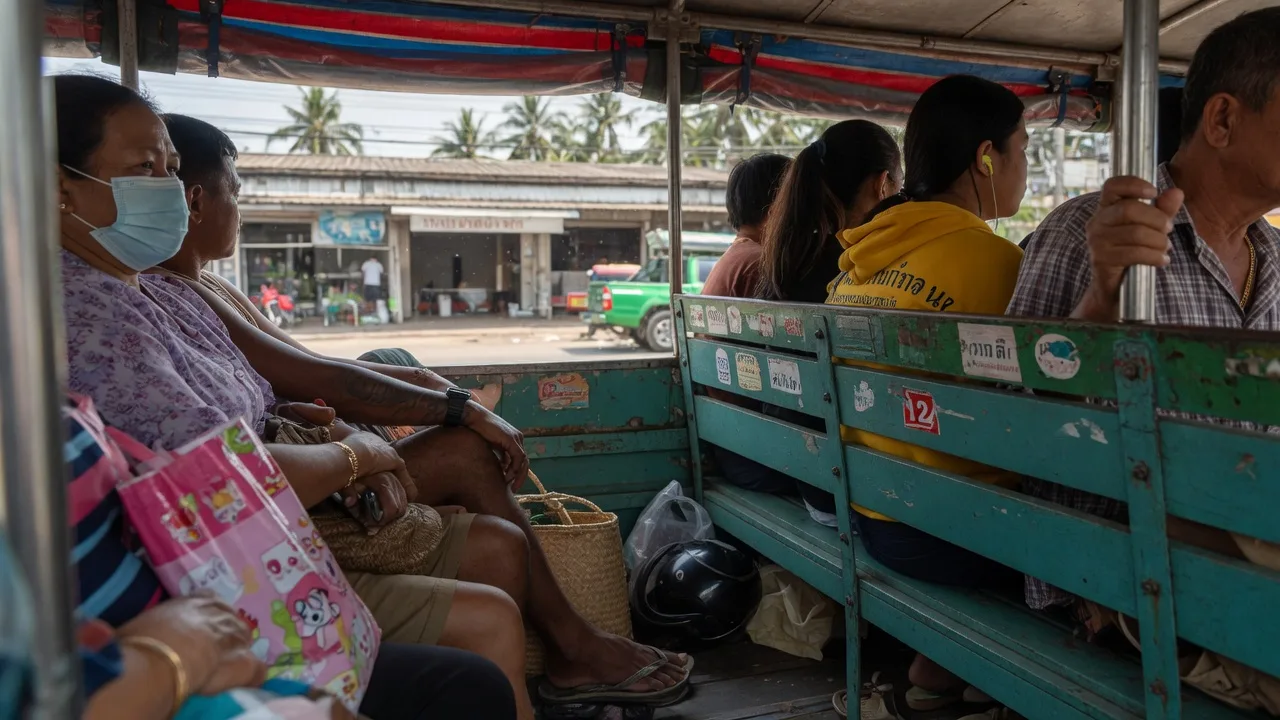
| 6 | Chiang Mai | Doi Suthep, Wat Suan Dok, Wat Phra Singh, Wat Chiang Man | Doi Suthep songthaew + naga steps; Monk Chat is free and not a photo-op first |
| 7 | Chiang Mai | Wat Umong, Wat Phra That Doi Kham | Quiet morning; afternoon flight south |
Day 1: Bangkok — the royal temple trail
Start at the Grand Palace and Wat Phra Kaew at 08:30 opening — arrive earlier. The Emerald Buddha, guardian yaksha figures, and gilded murals are overwhelming in their detail. Allow 2–3 hours. The queue in afternoon sun is a self-inflicted injury. Wrap rental exists at the gate if you mis-pack; bringing the scarf is cheaper.
Walk to Wat Pho — the Reclining Buddha, the oldest and largest temple complex in Bangkok in the sense visitors mean. Book a traditional Thai massage at the temple’s school if you want the one with a lineage rather than a mall storefront; ฿260 for 30 minutes has been the long-running public figure — verify at the desk. Afternoon ferry across to Wat Arun; climb the central prang for river views if the steps are open (they close in rain and when the stone is too treacherous). Evening: dinner at Tha Maharaj waterfront, or any ordinary rice shop once the gold is out of your eyes.
City orientation if this is also your first week: Bangkok, First week.
Day 2: Bangkok — hidden temples and Chinatown
Morning: Wat Traimit and the Golden Buddha — 5.5 tonnes of solid gold, found under plaster, not a metaphor. Walk through Chinatown to Wat Mangkon Kamalawat, Bangkok’s most important Chinese temple, where Mahayana and folk practice sit in the same courtyard as the city’s best lunch. Eat at street height. Table & Bazaar: Street food.
Afternoon: Wat Saket (Golden Mount) — climb 344 steps for old-city views. Continue to Wat Benchamabophit (the Marble Temple) — Italian Carrara marble and 52 Buddha images representing styles from across Asia. Evening: canal boat along Khlong Saen Saep for a different city, or walk until the air-con of a BTS station feels like a climate.
A compact daypack beats a rolling suitcase on this day. Water in the compound is fine; eating in the inner hall is not.
Day 3: Ayutthaya — the ancient capital
Train to Ayutthaya (about 1.5 hours from Bangkok). Bicycle the ruins rather than a sealed van: Wat Mahathat (Buddha in tree roots), Wat Phra Si Sanphet (the three chedis), Wat Ratchaburana (climb the prang if it is open), and Wat Chaiwatthanaram (Khmer-style, riverside, the one that earns the sunset). Visit the Chao Sam Phraya National Museum for context on the destroyed city’s former glory. Stay overnight to see the ruins illuminated if the lighting programme is running — verify that week, not from a 2019 blog.
People & Spirit’s history of the city: Ayutthaya Kingdom. Gateway city page: Ayutthaya. Heat on brick is worse than heat on Bangkok pavement; a compact umbrella is shade as much as rain.
Day 4: Lopburi and Nakhon Pathom
Morning train to Lopburi (about 2 hours from Ayutthaya). Visit Prang Sam Yot — the Khmer shrine overrun by macaques. Do not feed them. Do not carry a plastic bag of fruit as a handbag. The annual Monkey Banquet Festival in November lays out a feast for the monkeys; it is a spectacle and a wildlife-management problem in the same photograph.
Walk the old town’s Khmer ruins. Afternoon: return toward Bangkok and stop at Nakhon Pathom for Phra Pathom Chedi — often cited as the world’s tallest Buddhist monument at 120.5 metres, built over an original stupa with Dvaravati roots (3rd-century tradition; the tower you see is later). Return to Bangkok by evening. Ancient-kingdom context: Ancient kingdoms.
Day 5: Transfer to Chiang Mai
Fly or take the morning train to Chiang Mai. The train is the romance; the flight is the afternoon you still have. Getting there. Afternoon: ease into the city. Walk the old-city moat. Visit Wat Chedi Luang — the massive, earthquake-damaged chedi that once housed the Emerald Buddha. Evening: Night Bazaar, or a Lanna khantoke dinner (traditional northern feast on a low circular tray, with cultural performances) if you want the staged version of the north. The unstaged version is a plastic table and sticky rice.
Chiang Mai. Northern itinerary if you have a second week: Northern adventure.
Day 6: Chiang Mai temples
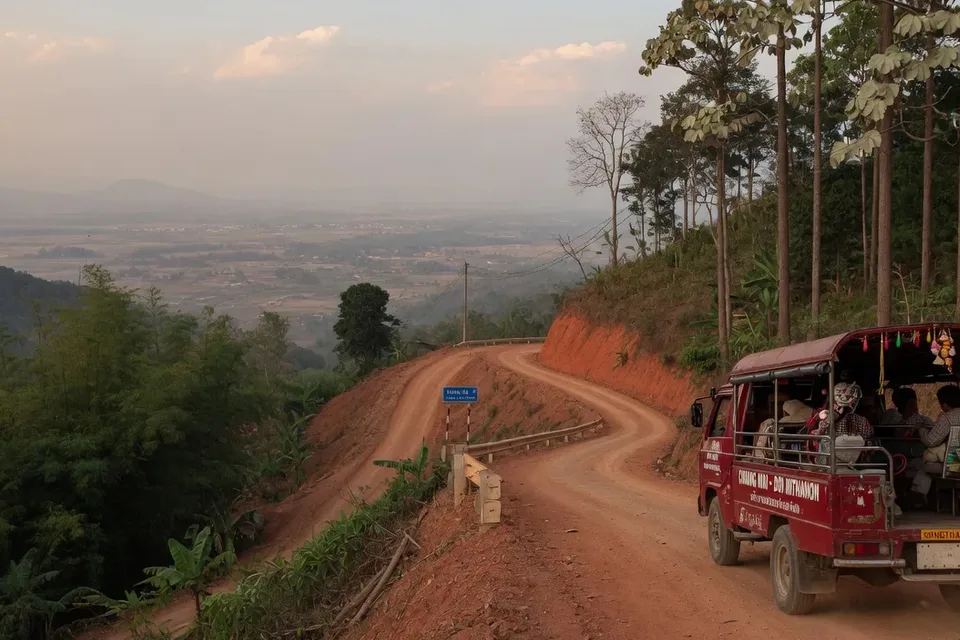
Morning: Doi Suthep — songthaew up the mountain, climb the 309 naga steps, circle the golden chedi at 1,073 metres. Clear morning views over the city; haze in March–April can erase them. Descend and visit Wat Suan Dok — white royal chedis against the mountain backdrop. Participate in a Monk Chat session if one is running: it is conversation, not a blessing you film.
Afternoon: Wat Phra Singh (Lanna masterpiece murals), Wat Chiang Man (oldest temple in the city, Crystal Buddha). Evening: Sunday Walking Street if it is Sunday; Warorot Market any other night. Modest dress still applies at the mountain wat; the same scarf from day 1 is still the scarf.
Day 7: Quiet temples and departure
Morning: Wat Umong — the atmospheric forest temple with tunnels. Then Wat Phra That Doi Kham — a hilltop gem with a 17-metre golden Buddha and fewer coaches. Reflect, or just sit. Afternoon flight to Bangkok for the international departure, or stay if the stamp still has weeks on it.
Cool-season Chiang Mai mornings can want a layer. Doi Inthanon at 2,565 m is a different day-trip if you have a spare day and want cloud forest rather than another chedi — Land & Sea: Doi Inthanon.
Etiquette that actually gets you through the gate
- Cover shoulders and knees at every temple — royal wats strictly; neighbourhood wats still mean it.
- Remove shoes before entering buildings. Slip-on travel shoes beat laces on 35 °C stone.
- Never point feet at Buddha images. Sit mermaid-style if your knees allow it.
- Women: do not hand objects directly to monks.
- Do not climb on or pose disrespectfully with Buddha images. Several high-profile visitors have been removed, fined, or worse.
- Photography: usually permitted in courtyards; check for signs inside buildings. Inner ubosot often no photos.
- Cash for ticketed sites. Opening hours skew morning.
Next
Temple etiquette, Bangkok, Ayutthaya, Chiang Mai, When to visit.