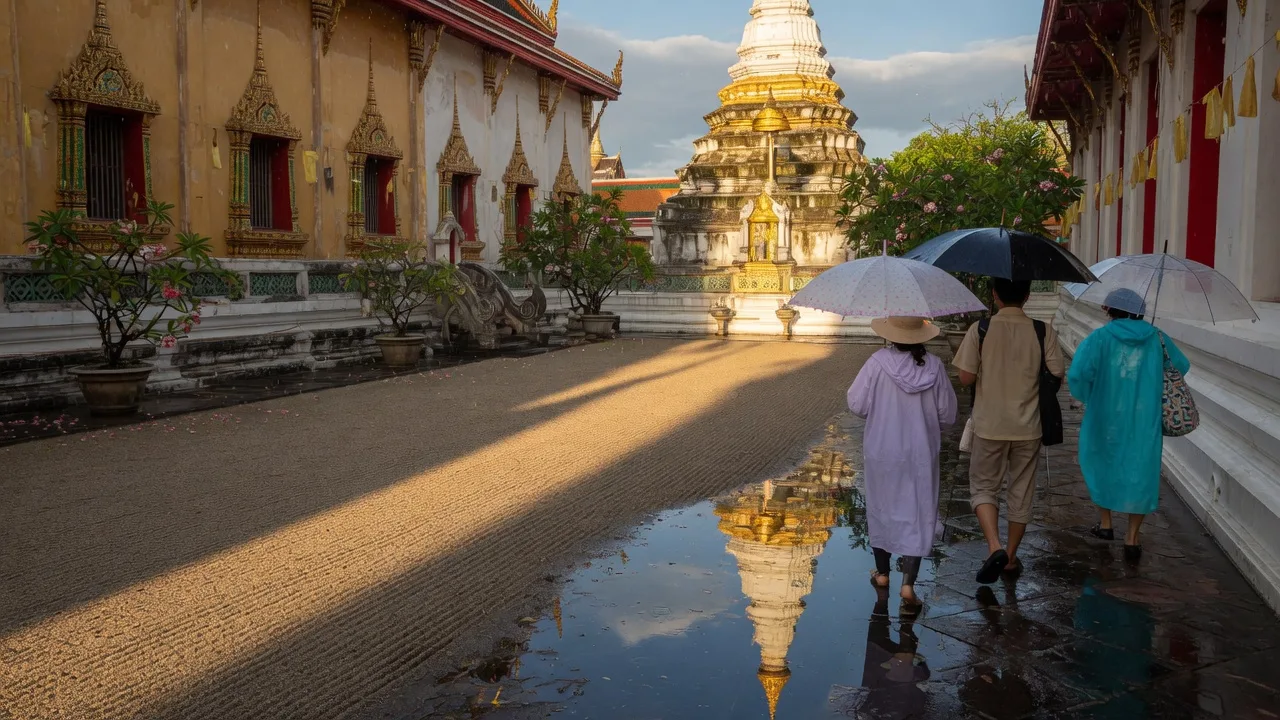
Thailand's tropical climate means it's warm year-round, but the experience varies enormously depending on when — and where — you visit. The country's weather divides roughly into three seasons, with critical regional variations that can make or break a holiday.
The Three Seasons
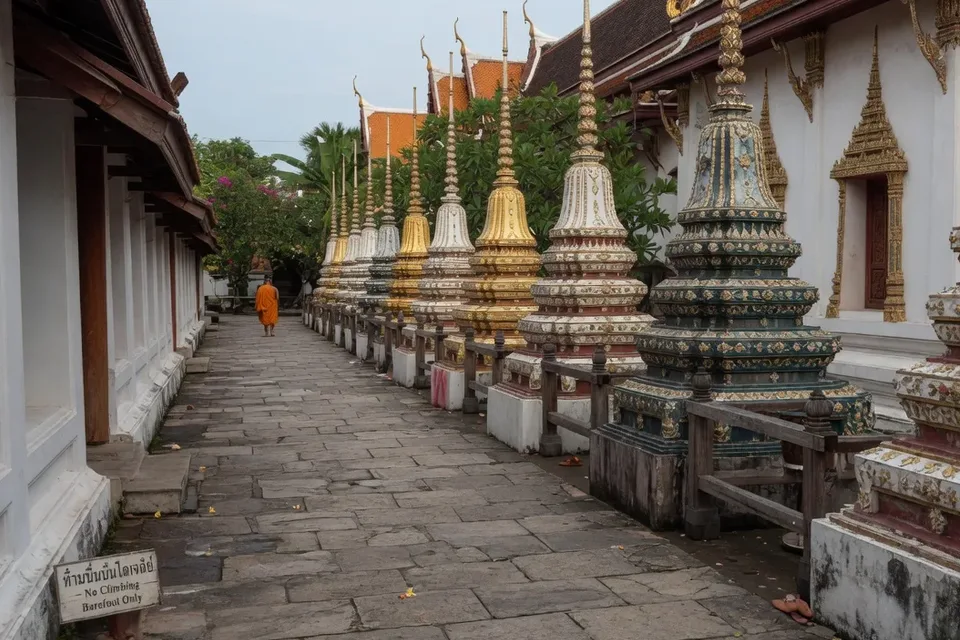
- Cool Season (November–February): The most popular time. Lower humidity, comfortable temperatures (20–32°C), clear skies, and minimal rain across most of the country. Peak tourist season — highest prices and largest crowds, especially December–January.
- Hot Season (March–May): Temperatures climb to 35–40°C. April is searing. Fewer tourists, lower prices. The Songkran water festival (13–15 April) is a highlight. The north suffers from agricultural burning haze (February–April).
- Rainy Season (June–October): The southwest monsoon brings daily showers — typically heavy but brief (1–2 hours) in the afternoon, with sunshine between. A packable rain jacket beats waiting out a squall in a 7-Eleven doorway. Everything is lush and green. Significantly fewer tourists, lowest prices, but some islands and dive sites close.
The Critical Regional Exception
The Gulf coast (Koh Samui, Koh Phangan, Koh Tao) operates on a different monsoon pattern. It receives its heaviest rain in October–December, when the rest of Thailand is entering its best weather. Conversely, the Gulf coast stays relatively dry during the southwest monsoon (May–September), when the Andaman coast (Phuket, Krabi) is at its wettest. This is extremely useful for trip planning.
Month-by-Month Breakdown
January
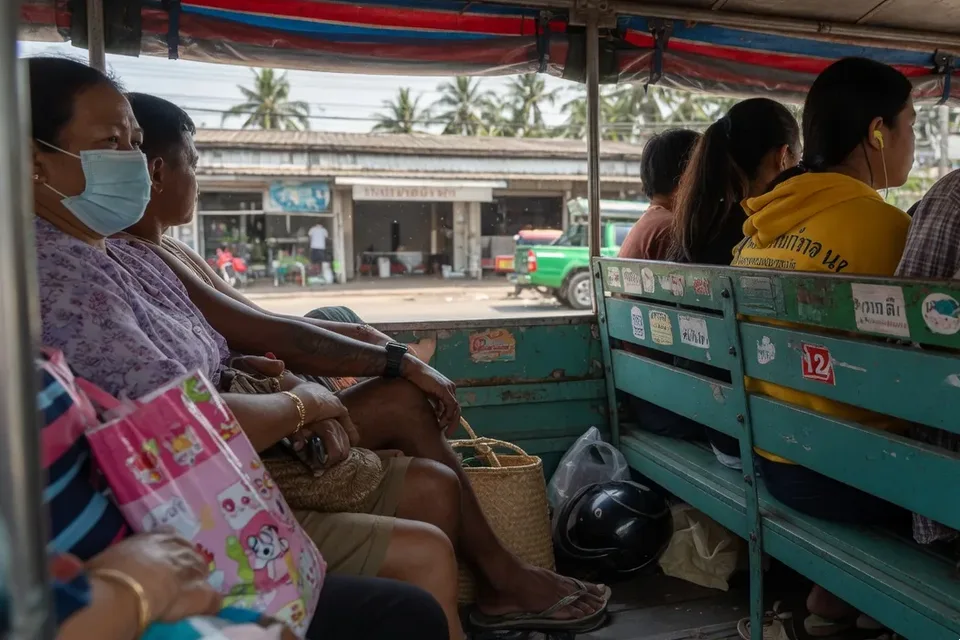
Weather: Cool season at its peak. Clear skies, 20–30°C across most of the country. Northern mountains can drop to 5–10°C at altitude — bring a jacket for Chiang Mai.
Crowds & Prices: Peak season in full swing. New Year holiday overlaps. Highest accommodation prices, especially at beach resorts and in northern Thailand.
Highlights: Perfect weather for temples, trekking, and beach holidays. Full Moon Party on Koh Phangan draws large crowds.
Best For: Everywhere — this is Thailand's prime month. Book accommodation well ahead.
February
Weather: Dry and increasingly warm (25–33°C). Still pleasant. Northern haze begins to develop.
Crowds & Prices: Still peak season, though slightly quieter than December–January.
Highlights: Chiang Mai Flower Festival (first weekend). Chinese New Year celebrations in Bangkok's Chinatown and Phuket (Phuket has the largest Chinese-Thai community in the south).
Best For: Andaman coast (Phuket, Krabi, Phi Phi), Bangkok, Ayutthaya.
March
Weather: Hot season begins. Temperatures 30–37°C. Northern Thailand haze intensifies.
Crowds & Prices: Shoulder season — crowds thin, prices moderate.
Highlights: Pattaya Music Festival. Andaman coast still in dry season.
Best For: Andaman coast (last month of prime conditions), southern islands, Bangkok (if you can handle the heat).
Avoid: Northern Thailand (severe air quality issues from burning).
April
Weather: The hottest month — 35–40°C across the country. High humidity. Oppressive in Bangkok and the central plains.
Crowds & Prices: Low season except for Songkran period.
Highlights: Songkran (13–15 April) — Thai New Year and the world's largest water fight. The entire country engages in days of water throwing, street parties, and celebration. Bangkok's Khao San Road and Silom Road are epicentres. Chiang Mai's celebrations are legendary. An extraordinary cultural experience if you embrace getting completely soaked.
Best For: Songkran experience. Otherwise, escape to mountainous areas or air-conditioned retreats.
May
Weather: The monsoon arrives. First heavy rains — dramatic thunderstorms, typically in the afternoon. Temperatures ease slightly (28–35°C). The Andaman coast enters wet season.
Crowds & Prices: Low season begins. Hotel prices drop 20–40%.
Highlights: Royal Ploughing Ceremony (Bangkok). Visakha Bucha (Buddha Day) — full moon in May, the most important Buddhist holiday.
Best For: Gulf coast (Koh Samui, Koh Phangan, Koh Tao) enters its best period. Excellent diving conditions.
June
Weather: Full monsoon. Heavy afternoon rain across most regions. High humidity but temperatures cooler than April (27–33°C). Andaman coast: rough seas, some ferry services reduced.
Crowds & Prices: Lo
w season. 30–50% discounts on accommodation. Resorts are quiet.
Highlights: Lush, green landscapes. Waterfalls at maximum flow. Excellent for photography.
Best For: Gulf islands, northern Thailand (between storms), cultural attractions (temples without crowds).
Avoid: Andaman coast for beach holidays; Similan Islands closed.
July
Weather: Similar to June. Rain continues, heaviest in the north.
Crowds & Prices: Low season, with a slight uptick from summer European travellers.
Highlights: Khao Phansa (start of Buddhist Lent/rainy retreat) — candlelit processions at temples. Ubon Ratchathani Candle Festival is spectacular.
Best For: Isan cultural experiences, Gulf coast, Bangkok cultural attractions.
August
Weather: One of the wettest months overall. Northern and northeastern Thailand are particularly wet.
Crowds & Prices: Low season.
Highlights: Queen's birthday (12 August / Mother's Day). Quietest time at major attractions.
Best For: Gulf coast. Bargain hunting.
September
Weather: Heaviest rains in many areas. Flooding possible in Bangkok and the central plains. Andaman coast at its roughest.
Crowds & Prices: The lowest of low season. Maximum discounts.
Highlights: Vegetarian Festival (usually September/October) in Phuket — a dramatic Chinese-Thai event with fire-walking and face-piercing rituals.
Best For: Budget travellers willing to work around the rain. Gulf coast still decent.
Caution: Check conditions before booking. Some islands and dive sites closed.
October
Weather: Monsoon's last gasp on the Andaman coast. Rains ease in the north and northeast. Gulf coast enters its wettest period (October–December).
Crowds & Prices: Transition period. Prices start rising in anticipation of high season.
Highlights: Ok Phansa (end of Buddhist Lent) celebrations. Illuminated boat processions. Naga fireballs of Nong Khai (mysterious lights rising from the Mekong).
Best For: Northern Thailand recovers early. Central Thailand.
Avoid: Gulf coast (worst weather period — Koh Samui, Koh Phangan).
November
Weather: Cool season arrives. Andaman coast clears up beautifully. 22–30°C. Low humidity. Clear skies.
Crowds & Prices: High season begins. Prices rise, especially at beach resorts.
Highlights: Loy Krathong (full moon in November — usually) — Thailand's most beautiful festival. Thousands of floating lotus-shaped lanterns (krathong) released onto rivers, canals, and lakes across the country. In Chiang Mai, simultaneously celebrated as Yi Peng — thousands of sky lanterns released into the night sky. An unforgettable experience.
Best For: Everywhere except the Gulf coast (wait until January). Chiang Mai for Yi Peng.
December
Weather: Peak cool season. 20–28°C in the north; 25–31°C in the south. Clear, dry, pleasant everywhere (except the Gulf coast, which is still in its wet period, easing toward the end of the month).
Crowds & Prices: Peak season. Highest prices of the year, especially Christmas/New Year. Beach resorts and Chiang Mai hotels book out months ahead.
Highlights: New Year celebrations. Full Moon Party on Koh Phangan is one of the year's biggest.
Best For: All of Thailand except Gulf coast (which improves after mid-December). The Andaman coast is at its absolute best.
Summary Table
| Month | Best Regions | Avoid | Season | Prices |
|---|---|---|---|---|
| Jan | All | — | Cool | Peak |
| Feb | All | Northern haze starts | Cool | Peak |
| Mar | Andaman, South | North (haze) | Hot start | Shoulder |
| Apr | Songkran only | Heat everywhere | Hot | Low |
| May | Gulf coast | Andaman coast | Rainy start | Low |
| Jun–Sep | Gulf coast, Culture | Andaman coast | Rainy | Lowest |
| Oct | North, Central | Gulf coast | Transition | Rising |
| Nov | Andaman, North | Gulf coast | Cool start | High |
| Dec | Andaman, North, Central | Gulf coast (early) | Cool | Peak |