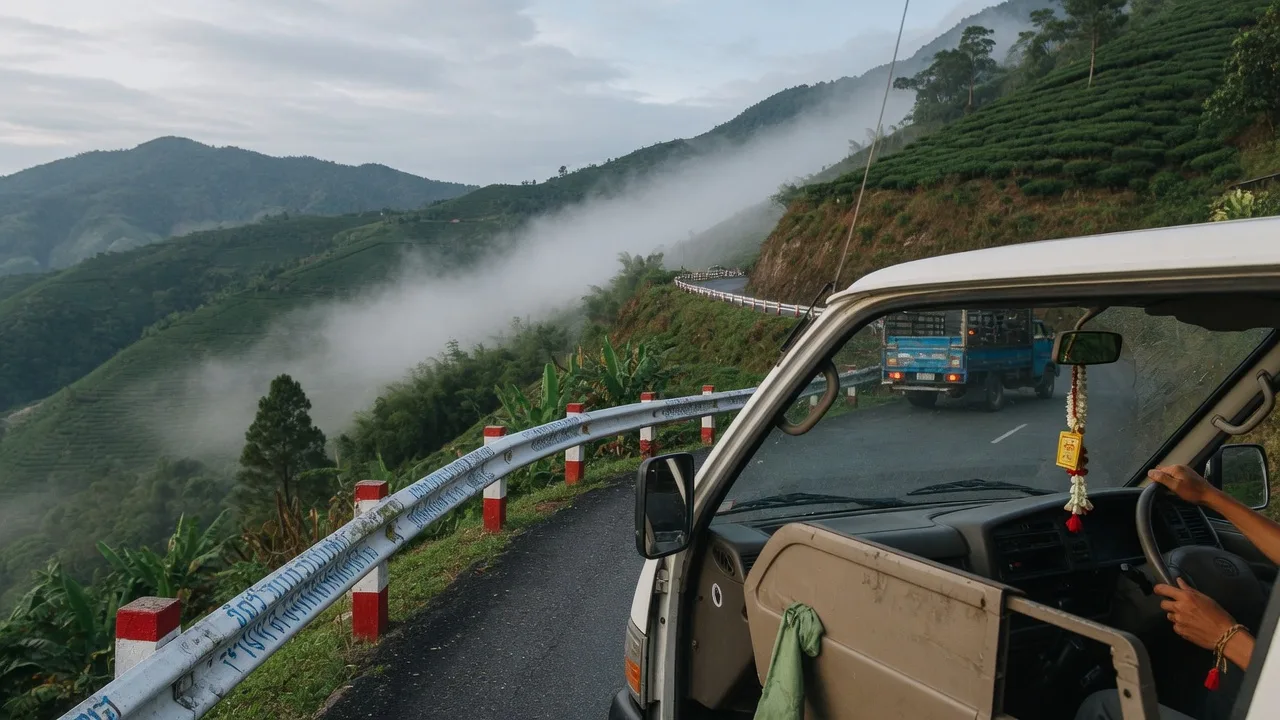
This 14-day route takes you from the electric chaos of Bangkok through the ancient ruins of Ayutthaya and Sukhothai to the cultural heart of Chiang Mai, the mountain villages of Pai, and the fabled Golden Triangle at the borders of Thailand, Laos, and Myanmar. It's the quintessential northern Thailand experience — temples, trekking, night markets, and encounters with some of the warmest people on earth.
Best Time: November–February (cool season). Avoid February–April (burning season haze in the north).
Budget: ฿25,000–40,000 (£570–910) for mid-range, excluding international flights.
Day 1–2: Bangkok
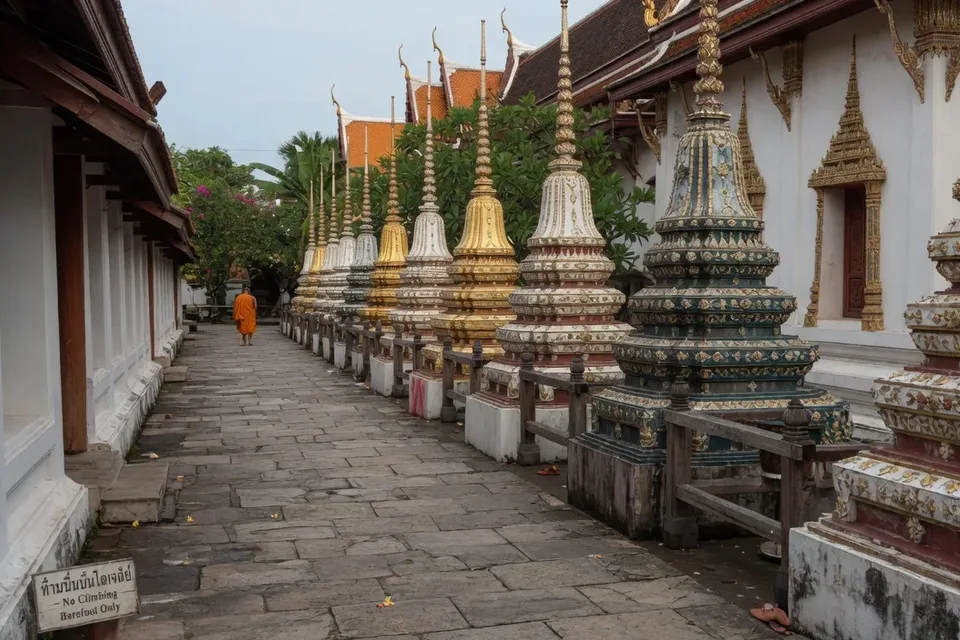
Arrive at Suvarnabhumi, transfer to city. Use these two days to acclimatise to the tropics and absorb Bangkok's energy.
Day 1: Grand Palace and Wat Phra Kaew (morning, go early to beat the heat and crowds). Wat Pho and the Reclining Buddha (afternoon). Chao Phraya ferry to Wat Arun for sunset views from the river. Evening: Yaowarat (Chinatown) street food crawl.
Day 2: Chatuchak Weekend Market (if Saturday/Sunday) or Chinatown by day (if weekday). Jim Thompson House (the silk king's teak mansion). Afternoon: BTS to Sukhumvit for modern Bangkok — shopping at Terminal 21, coffee in Thonglor. Evening: rooftop cocktails at a sky bar (Vertigo at Banyan Tree or Octave at Marriott Sukhumvit).
Stay: Khao San Road area (budget), Silom/Sathorn (mid-range), or Sukhumvit (upscale).
Day 3: Ayutthaya
Take the morning train from Bangkok to Ayutthaya (1.5 hours, from ฿20 in 3rd class — a brilliant experience). Rent a bicycle at the station and spend the day exploring the ruins: Wat Mahathat (the Buddha head in tree roots), Wat Phra Si Sanphet (the three chedis), Wat Ratchaburana, and Wat Chaiwatthanaram (save this for late afternoon light).
Option A: Return to Bangkok by evening train and catch the overnight sleeper to Chiang Mai (departs 18:10 or 19:35).
Option B: Stay overnight in Ayutthaya (budget guesthouses from ฿400) — see the ruins illuminated after dark — and travel to Sukhothai the next morning.
Day 4: Sukhothai
If taking Option B: bus from Ayutthaya to Sukhothai (6 hours, ฿300–400). Arrive afternoon. Check into accommodation near the Historical Park.
Sukhothai Historical Park: Thailand's first capital (1238–1438), a UNESCO World Heritage Site that's quieter and more serene than Ayutthaya. The central zone's reflecting pools and seated Buddhas surrounded by lotuses are unforgettable, particularly at dawn or dusk. Rent a bicycle (฿30) and explore the central, northern, and western zones.
Evening: Night market at the old city gate. The park is beautifully illuminated on some evenings (check locally).
Stay: Guest houses near the old town (฿300–800) or the charming Legendha Sukhothai Resort.
Day 5: Sukhothai to Chiang Mai
Morning: Si Satchanalai Historical Park — a satellite city of the Sukhothai kingdom, 60km north. Less restored than Sukhothai, more atmospheric, and virtually empty of tourists. Explore by bicycle through jungle-clad ruins.
Afternoon: Bus to Chiang Mai (5–6 hours, ฿250–350). Arrive evening.
Alternative: Skip Sukhothai and take the overnight train directly from Bangkok to Chiang Mai (13–15 hours; 2nd class A/C sleeper ฿600–900). Arrive morning of Day 4, giving you an extra day in Chiang Mai.
Day 6–8: Chiang Mai
Three full days to explore the cultural capital of the north.
Day 6: Old city temples — Wat Phra Singh, Wat Chedi Luang, Wat Chiang Man. Lunch at Khao Soi Khun Yai (the definitive khao soi). Afternoon: Wat Umong (the tunnel temple in the forest). Evening: Sunday Walking Street market (if Sunday) or Night Bazaar.
Day 7: Morning: Doi Suthep temple and national park (songthaew from old city, ฿40). Afternoon: Thai cooking class (half-day, ฿900–1,200). Evening: Riverside dining at The Good View or Riverside Bar.
Day 8: Full-day ethical elephant experience at Elephant Nature Park (฿2,500, includes hotel pickup, lunch, and a full day observing, feeding, and bathing rescued elephants). The gold-standard ethical sanctuary. Book weeks ahead in peak season.
Alternative Day 8: Doi Inthanon National Park — Thailand's highest peak (2,565m). Cool cloud forest, waterfalls, twin Royal Pagodas, and Hmong hill-tribe market. Full-day trip (฿2,000 with guide/transport).
Stay: Old city guesthouses (฿400–800 budget), boutique hotels along the Ping River (฿1,500–3,000 mid-range).
Day 9–10: Pai
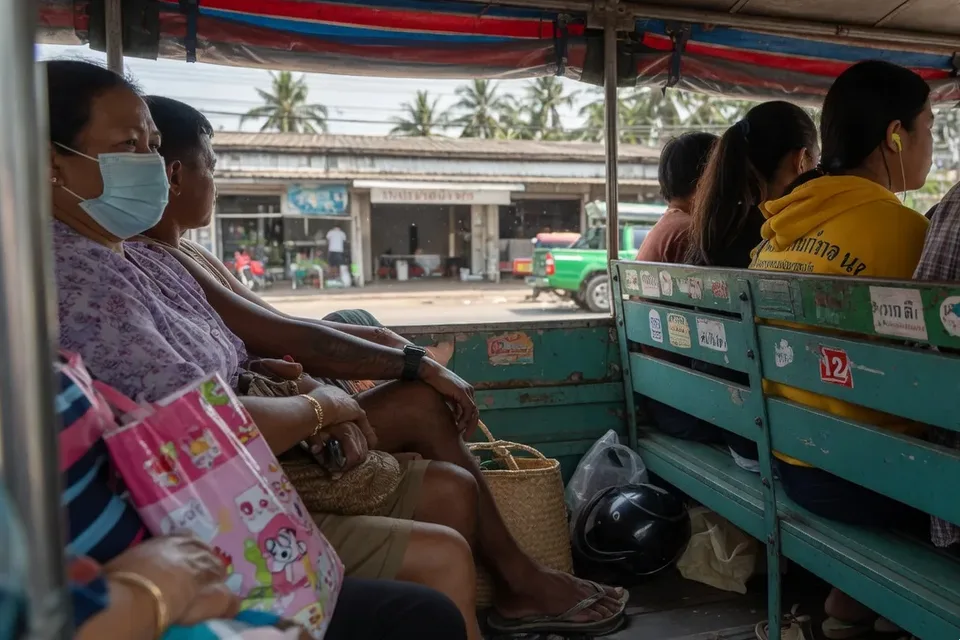
Bus from Chiang Mai to Pai — the legendary 762-curve mountain road (3–4 hours, ฿150–200). Motion sickness medication recommended. Pai is a small mountain valley town that's become a bohemian backpacker hub — yoga studios, organic cafes, live music, and a pace of life that makes Chiang Mai seem like London.
Day 9: Arrive, settle in. Rent a motorbike (฿150) or bicycle. Visit Pai Canyon (sunset views over the valley), the Memorial Bridge (WWII-era bridge with spectacular mountain backdrop), and Mo Paeng Waterfall (natural rock slides, bring swimwear).
Day 10: Morning: Tha Pai Hot Springs — natural hot spring pools in a forest setting (฿300). Afternoon: Pai's Walking Street (nightly craft and food market). Evening: Live music at one of Pai's many bars.
Stay: Pai has hundreds of guesthouses and bungalows from ฿200 (bamboo hut) to ฿3,000 (pool villa). Pai Village Boutique Resort is the upscale option.
Day 11–12: Chiang Rai & The Golden Triangle
Bus from Pai to Chiang Rai (4 hours, ฿200–250). Chiang Rai is the northernmost major city, gateway to the Golden Triangle and Myanmar/Laos borders.
Day 11: Wat Rong Khun (The White Temple) — Chiang Rai's unmissable attraction. A contemporary temple built by artist Chalermchai Kositpipat, blending traditional Buddhist architecture with surreal modern imagery (Superman, Hello Kitty, The Matrix). Stunningly beautiful and deeply weird. Then: Baan Dam (Black House) — the dark counterpart to the White Temple, a collection of black buildings filled with animal skulls, furs, and twisted artwork by the late National Artist Thawan Duchanee. Late afternoon: Chiang Rai Clock Tower light-and-sound show (19:00, 20:00, 21:00 — free).
Day 12: Golden Triangle day trip. Drive to the Golden Triangle at Chiang Saen — the point where Thailand, Laos, and Myanmar meet at the confluence of the Mekong and Ruak rivers. Visit the Hall of Opium (excellent museum on the history of the opium trade, ฿200), take a boat trip on the Mekong, and visit Mae Sai — Thailand's northernmost town, at the Myanmar border. If time permits, the Doi Mae Salong area offers Chinese (ex-KMT) tea plantations and mountain scenery.
Stay: Chiang Rai city centre (฿500–2,000) or the spectacular Four Seasons Tented Camp (extreme luxury, from ฿50,000).
Day 13: Return to Chiang Mai or Bangkok
Option A: Fly Chiang Rai to Bangkok (1h30m, from ฿1,500). Spend the final evening in Bangkok — perhaps a farewell dinner at a restaurant you missed.
Option B: Bus to Chiang Mai (3.5 hours, ฿150) and fly from there.
Option C: Continue overland to Laos via the Chiang Khong border crossing (4th Thai-Lao Friendship Bridge), taking the slow boat down the Mekong to Luang Prabang.
Day 14: Departure
Final morning in Bangkok: massage at a reputable spa. Airport transfer. Departure.
Packing Essentials for the North
- Light jacket or fleece (November–February temperatures drop to 10–15°C in the mountains)
- Comfortable walking shoes (temple sites involve significant walking)
- Temple-appropriate clothing (covered shoulders and knees)
- Insect repellent (especially for Pai and trekking)
- Motion sickness medication (for the Chiang Mai–Pai road)