Thailand's reputation as the "Land of Smiles" is well deserved — the Thai people are among the most welcoming and forgiving of cultural missteps on earth. But underneath the warmth lies a deeply hierarchical, Buddhist-influenced social code with certain non-negotiable rules. Violating the most serious ones can cause genuine offence, social embarrassment, or even legal trouble. Understanding these norms isn't just polite — it transforms your experience from tourist to welcome guest.
The Monarchy — Absolute Respect
This is the single most important cultural rule in Thailand. The monarchy is revered with an intensity that has no Western equivalent — it is simultaneously a constitutional institution, a spiritual symbol, and a deeply personal bond for the Thai people.
Rules:
- Never criticise, joke about, or speak disrespectfully of the King, Queen, or any member of the royal family — in any context, including private conversations, social media, or emails. Lèse-majesté laws (Article 112) carry penalties of 3–15 years' imprisonment per offence. These laws are actively enforced, including against foreigners.
- Stand for the royal anthem. The royal anthem (Sansoen Phra Barami) is played before every cinema screening and at certain public events. Everyone stands. Do the same.
- The national anthem plays at 8:00 and 18:00 daily at public spaces (parks, train stations, some streets). Thais stop and stand. As a visitor, stopping is polite and expected.
- Do not step on Thai currency — coins and notes bear the King's image. Stepping on money is considered deeply disrespectful.
The Head & Feet
In Thai culture, the body exists in a hierarchy:
- The head is the highest and most sacred part of the body.
- The feet are the lowest and most impure.
Practical implications:
- Never touch anyone's head — not even a child's (despite the Western instinct to pat children on the head). This is deeply offensive.
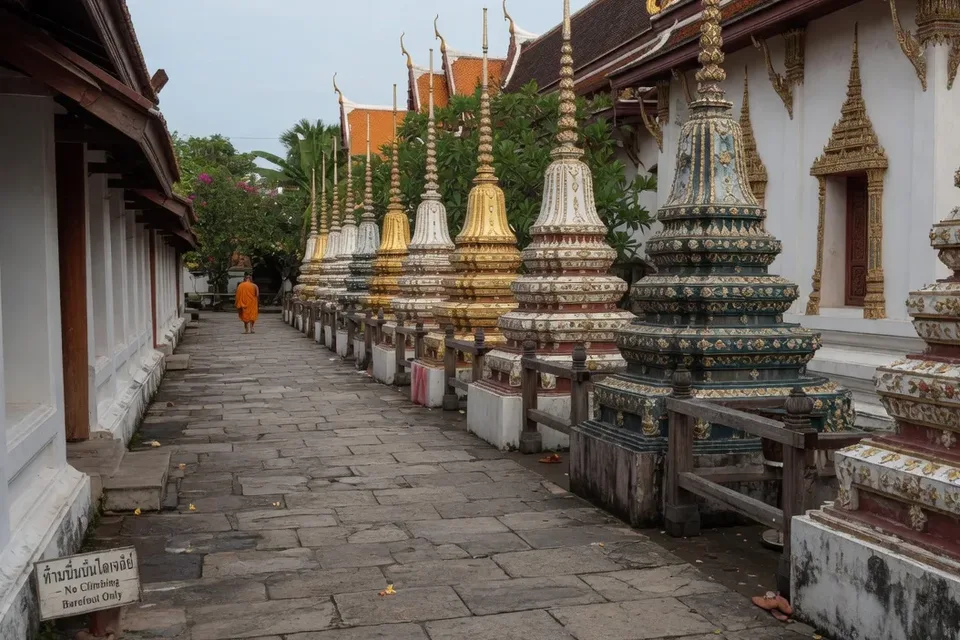
- Never point your feet at people, Buddha images, or temples. When sitting on the floor in a temple, tuck your feet beneath you or to the side, with soles pointing away from the Buddha.
- Remove shoes before entering temples, homes, and many shops. Watch for the pile of shoes at the door — that's your signal.
- Don't step over people — if someone is sitting or lying on the ground, walk around them, not over them.
- Don't use feet to point at things, move objects, or close doors. Using feet for anything other than walking is considered rude.
Temple Etiquette
Thailand has over 40,000 Buddhist temples (wats), and visiting them is a highlight of any trip. Proper behaviour shows respect:
- Dress modestly: Cover your shoulders and knees. No shorts, sleeveless tops, tank tops, or see-through clothing. Many major temples enforce this strictly — the Grand Palace has guards who will turn you away. Some provide wraps for hire/loan.
- Remove shoes before entering any temple building (but not the outer courtyard).
- Never climb on Buddha images or pose disrespectfully with them (no Buddha selfies, no sitting in Buddha's lap, no turning your back to the image for photos).
- Women must not touch monks — no handshakes, no accidental brushing. If a woman needs to hand something to a monk, place it on a cloth or surface for him to pick up.
- Sit or kneel lower than the Buddha image and monks. Don't stand towering over seated monks.
- Photography is usually permitted in temple grounds but may be restricted inside certain buildings. Look for signs or ask.
- Be quiet and respectful. Temples are active places of worship, not museums.
The Wai (ไหว้)

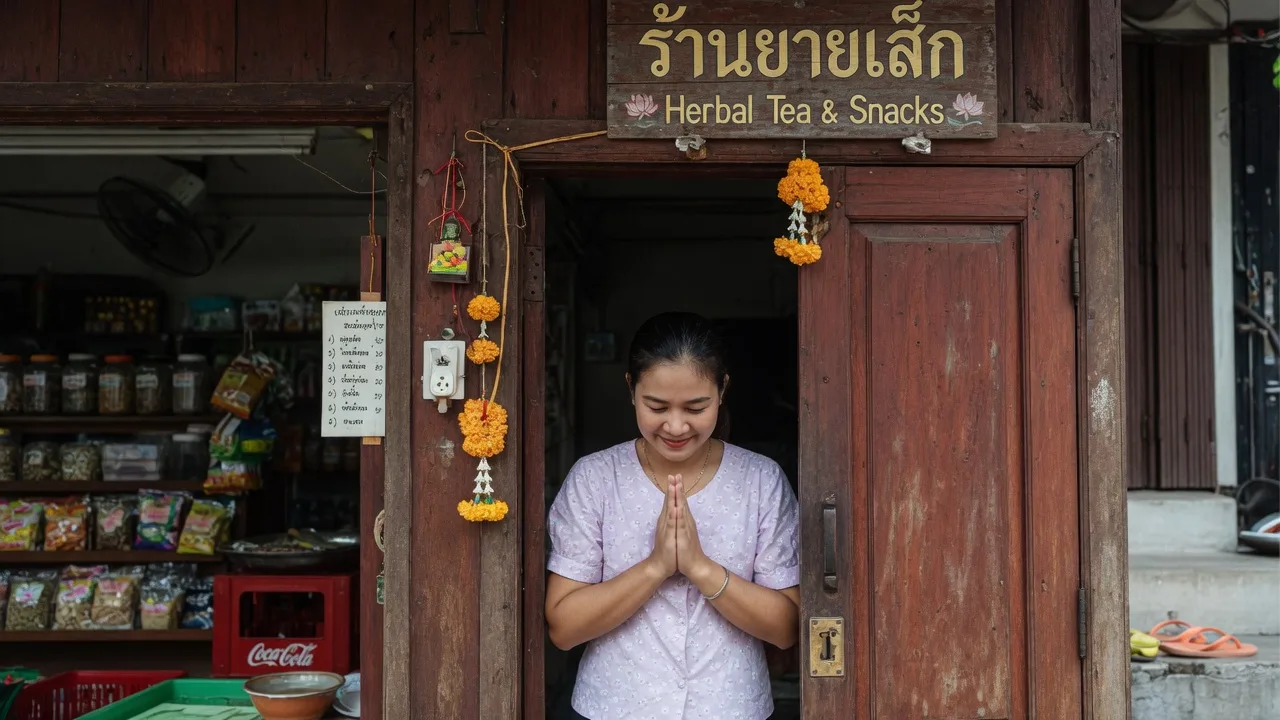
The wai — pressing palms together in a prayer-like gesture with a slight bow — is the traditional Thai greeting, farewell, and expression of respect. The height of the hands indicates the level of respect:
- Hands at chest: peers and equals
- Hands at chin: elders and social superiors
- Hands at nose: monks and very important elders
- Hands at forehead: the King and Buddha images
For visitors: You don't need to initiate wais — Thai people don't expect it from foreigners and may find it amusing (or confusing) if you wai everyone. However, returning a wai is polite and appreciated. A simple hands-at-chest gesture with a smile is perfect. You do not wai service workers (waiters, taxi drivers, hotel staff), children, or animals.
Losing Face (Sia Na)
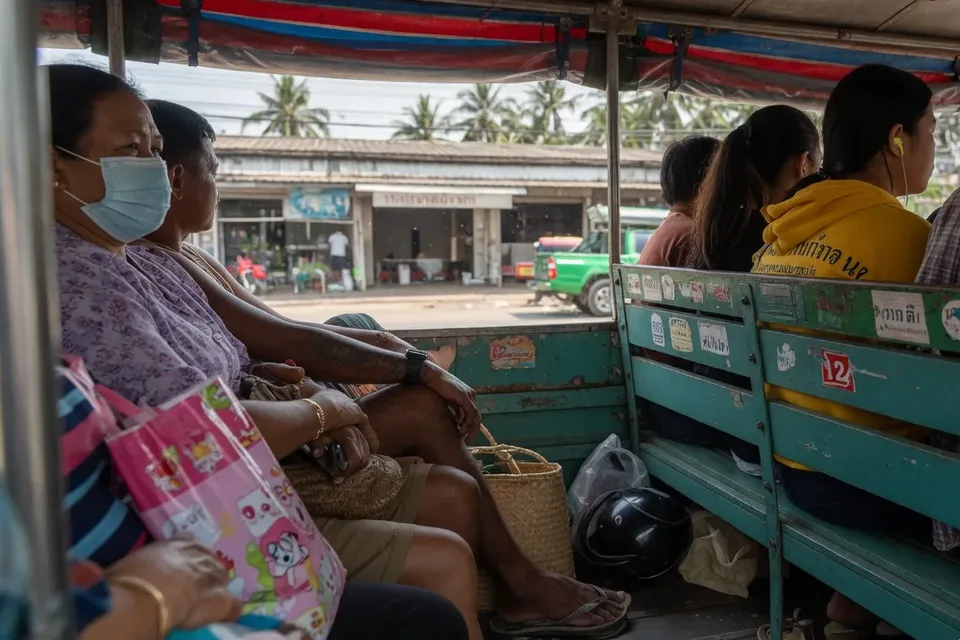
The concept of face (na) is central to Thai social interaction. Causing someone to "lose face" — through public criticism, confrontation, shouting, or embarrassment — is one of the worst things you can do in Thai culture.
What this means for visitors:
- Never shout at Thais — even when frustrated. Raise your voice and you've lost the argument, regardless of who's right.
- Don't publicly criticise or correct people. Address problems calmly, privately, and with a smile.
- Accept that "yes" sometimes means "I don't want to say no." Thai people will often agree to avoid confrontation, even when they can't deliver. Learn to read non-verbal cues.
- Smile. The Thai smile has at least 13 culturally recognised variations — including smiles of embarrassment, apology, and discomfort. A smile doesn't always mean happiness, but it always means "I'm maintaining social harmony."
Dining Etiquette
- Spoon and fork: Thais eat with a spoon (in the right hand) and fork (in the left). The fork pushes food onto the spoon — you don't put the fork in your mouth. Chopsticks are only used for noodle soups and Chinese food.
- Shared dishes: Thai meals are communal. Dishes are placed in the centre and everyone shares. Take small portions of each dish, add to your plate, and eat. Don't load your plate.
- Rice: Rice is the foundation. Start by taking rice, then add small amounts of curry, stir-fry, or relish. Don't mix everything together.
- Paying: The person who invites typically pays. Splitting the bill (AA — from the Thai-English slang "American share") is common among friends. Tipping is not traditional but is increasingly expected in tourist restaurants — rounding up or leaving 20–50 baht is appreciated.
- Don't waste rice. In Buddhist culture, wasting rice is considered disrespectful. Take only what you'll eat.
Dress Code
Thais place considerable importance on appearance and grooming:
- General: Neat, clean clothing is valued. Thailand is more conservative than most visitors expect. While beachwear is fine on the beach, walking through town in a bikini top or shirtless is considered inappropriate.
- Temples: Covered shoulders and knees (see temple etiquette above). A linen scarf in the bag solves more gates than a spare T-shirt.
- Rooftop bars/clubs: Smart casual. Many venues enforce dress codes (no flip-flops, no shorts, no singlets).
- Government offices and palaces: Long trousers or skirts, closed-toe shoes. The Grand Palace is the strictest.
Other Important Norms
- PDA: Public displays of affection beyond hand-holding are uncommon and considered somewhat inappropriate. Thai couples are generally discreet.
- Drugs: Thai drug laws are severe. Penalties for possession range from imprisonment to the death penalty for trafficking. Recreational drug use, despite its visible presence in some tourist areas, carries real legal risk.
- Littering: Carries a ฿2,000 fine in Bangkok (enforced in some areas).
- Gambling: Illegal in Thailand (except the national lottery and horse racing). This includes online gambling.
- Topless sunbathing: Illegal and culturally inappropriate. Thailand is more conservative about nudity than many visitors assume.