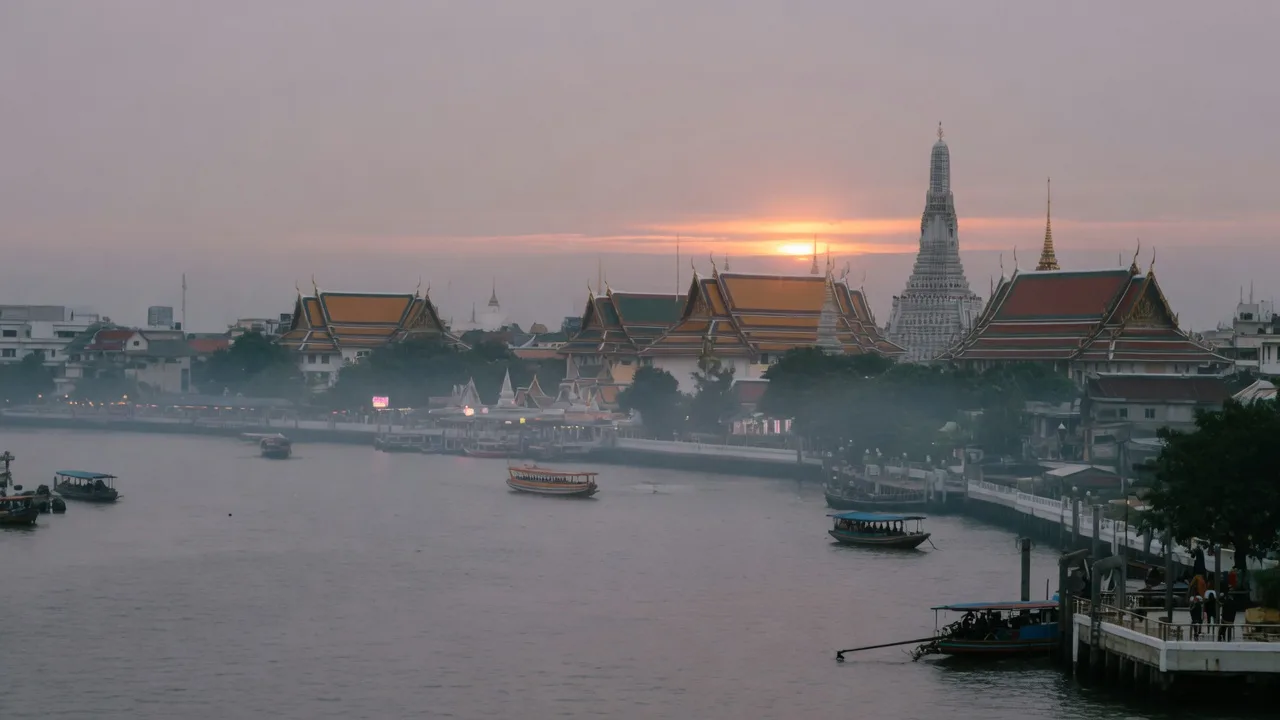
Bangkok — or Krung Thep Maha Nakhon (กรุงเทพมหานคร), the City of Angels — is one of the world's great metropolises: a sprawling, sweltering, sensory-overloading city of 10.7 million people where ancient temples share skyline with soaring glass towers, where a Michelin-starred meal can cost less than a London bus fare, and where the traffic is so legendary that Bangkokians plan their entire days around avoiding it.
It is Thailand's political capital, economic engine, cultural showcase, and spiritual heart — the city that nearly every visitor passes through, and the one that most frequently exceeds expectations. Bangkok is messy, noisy, occasionally overwhelming, and utterly magnificent.
Orientation
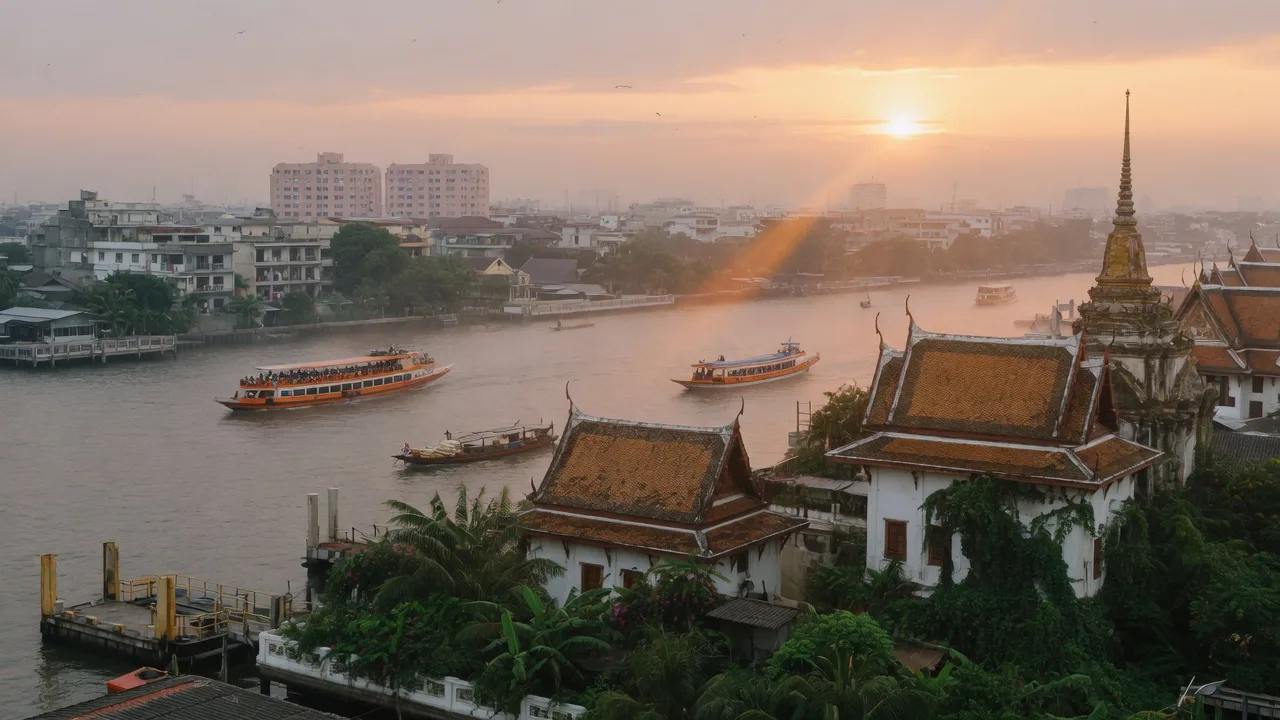
| Pin | Figure |
|---|---|
| Population (city proper, commonly cited) | ~10.7 million |
| Airports | Suvarnabhumi (BKK), Don Mueang (DMK) |
| Core rail | BTS Skytrain, MRT, Airport Rail Link |
| River | Chao Phraya express boats + hotel piers |
| First-week move | One wat in the morning, not three |

Bangkok sprawls across the flat Chao Phraya River floodplain with no natural boundaries to constrain it. The city has no single centre, but several distinct districts that function as hubs:
- Rattanakosin (Old City): The original royal district on the river's east bank. Home to the Grand Palace, Wat Pho, Wat Arun (across the river), and the National Museum. The historical and spiritual core.
- Chinatown (Yaowarat): One of the world's great Chinatowns, dating from the 1780s. Narrow lanes packed with gold shops, Chinese temples, and some of Bangkok's best street food.
- Silom/Sathorn: The financial district. Embassies, corporate towers, upscale restaurants, and Patpong Night Market (more tourist market than red-light district these days).
- Sukhumvit: The expat corridor stretching east for dozens of kilometres. International restaurants, rooftop bars, nightlife at Nana and Thonglor, and excellent BTS access.
- Siam/Ratchaprasong: The modern commercial heart. Siam Paragon, CentralWorld, and the BTS interchange. Shopping at its most extravagant.
- Khao San Road: The legendary backpacker strip, once the domain of gap-year travellers, now a broader tourist attraction with bars, street food, and budget accommodation.
- Thonburi: The west bank of the Chao Phraya. Wat Arun, the Royal Barges Museum, and a network of canals (khlongs) that offer a glimpse of old Bangkok.
Must-See Temples
Bangkok has over 400 Buddhist temples. You cannot (and should not try to) see them all. These are the essential ones:
The Grand Palace & Wat Phra Kaew
The most sacred site in Thailand. The Grand Palace complex (218,400 sq m) served as the royal residence from 1782 to 1925 and remains the ceremonial heart of the kingdom. Within its walls stands Wat Phra Kaew (Temple of the Emerald Buddha), housing the Emerald Buddha — a 66cm jade image in royal seasonal dress that is Thailand's most revered religious object. The King personally changes its golden garments three times a year.
Practical: Open 8:30–15:30 daily. Admission 500 baht (includes Vimanmek Palace). Strict dress code enforced — no shorts, sleeveless tops, or flip-flops. Loaner clothes available but queues are long. Arrive early to beat tour groups.
Wat Pho (Temple of the Reclining Buddha)
Adjacent to the Grand Palace, Wat Pho houses the magnificent 46-metre reclining Buddha — gold-plated, serenely smiling, and so large it barely fits in its enclosing chapel. The soles of its feet are inlaid with 108 mother-of-pearl panels depicting auspicious symbols. Wat Pho is also the national centre for traditional Thai massage; the massage school here offers excellent (and affordable) treatments.
Practical: Open 8:00–18:30 daily. Admission 200 baht (includes a free bottle of water). Less crowded in the afternoon.
Wat Arun (Temple of Dawn)
Rising 82 metres above the west bank of the Chao Phraya, Wat Arun's Khmer-style central prang (tower) is encrusted with thousands of pieces of Chinese porcelain and coloured glass that shimmer spectacularly at sunrise and sunset. You can climb the steep steps of the prang for panoramic river views.
Practical: Open 8:00–18:00. Admission 100 baht. Best reached by ferry from Tha Tien pier (4 baht). Stunning when illuminated at night — view from the east bank.
Wat Traimit
Home to the Golden Buddha — a 5.5-tonne solid gold seated Buddha image, the world's largest. Its golden nature was only discovered in 1955 when a plaster exterior cracked during relocation, revealing the pure gold beneath. The statue is valued at approximately US$250 million.
Wat Saket (Golden Mount)
A hilltop temple reached by climbing 344 steps up a spiral pathway. The summit offers 360-degree views of old Bangkok. A popular festival site during Loy Krathong.
Street Food
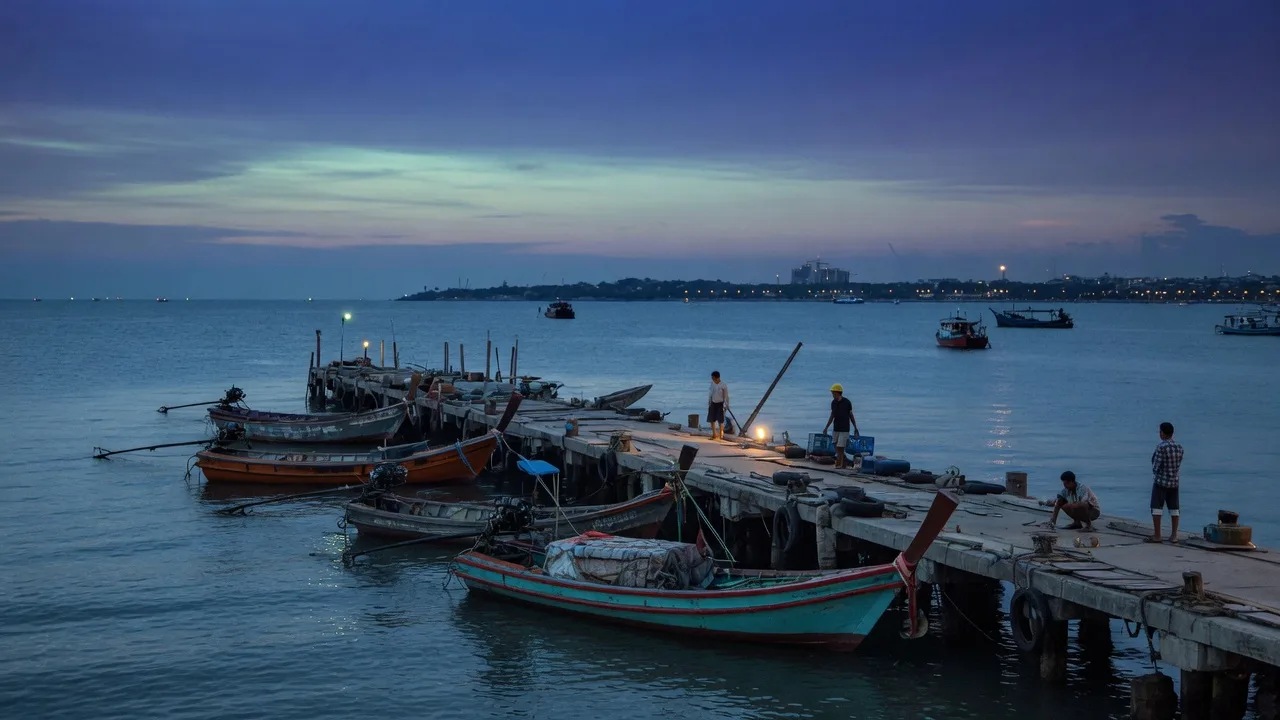
Bangkok's street food scene is one of the world's finest — and most affordable. In 2017, the city was recognised with numerous Michelin stars and Bib Gourmand awards for its street vendors, a first for the guide. Key areas and dishes:
- Yaowarat (Chinatown): The undisputed epicentre. Roasted duck, crab omelettes (hoi thod), grilled seafood, and Chinese-Thai noodle soups. Come after 6pm when the stalls open.
- Khlong Thom/Tha Phra Chan: Old-school food stalls near the university. Boat noodles (kuay tiaw reua) — intensely flavoured, served in tiny bowls, 15-20 baht each. You order several.
- Bang Rak: Home to Jek Pui (curry rice), legendary kuay jap (rolled noodle soup), and excellent khao kha moo (braised pork leg on rice).
- Pratunam: The garment district with superb khao man gai (Hainanese chicken rice) at Go-Ang Kaomunkai Pratunam, deservedly the most famous chicken rice in Thailand.
- Victory Monument: A circle of food stalls serving Isan classics — som tam, gai yang, larb — to hungry students and workers.
- Or Tor Kor Market: Bangkok's finest food market, spotlessly clean, with extraordinary tropical fruits, prepared food stalls, and premium ingredients.
Budget: A full street food meal in Bangkok: 40–80 baht (£1–2). A local restaurant: 80–200 baht (£2–5). Bangkok is the world's best-value food city.
Getting Around
Bangkok's traffic is legendary — and genuinely terrible. Peak hours (7:00–9:30 and 16:30–20:00) can see journeys of 5km take over an hour by road. The solution: avoid road transport during rush hour and use the excellent rail network.
BTS Skytrain
Elevated railway with two lines (Sukhumvit and Silom) covering the modern city. Clean, fast, air-conditioned, and running every 3–6 minutes. Single journey 17–62 baht. Day pass 140 baht. Essential for Sukhumvit, Siam, Silom, and Chatuchak.
MRT (Metro)
Underground railway connecting Hua Lamphong (Chinatown) to the northern suburbs via Sukhumvit, Ratchadaphisek, and Chatuchak. Clean and efficient. Single journey 16–42 baht.
Chao Phraya Express Boat
River boats running the length of the Chao Phraya through the old city. The orange-flag service (15 baht flat fare) connects major piers from Nonthaburi to Sathorn. The tourist boat (60 baht day pass) offers commentary. Essential for Rattanakosin, Chinatown, and Thonburi attractions.
Khlong Boats
Canal boats on Khlong Saen Saep connecting the old city (Golden Mount area) to Pratunam and eastern Sukhumvit. Cheap (10–25 baht), fast, and thrilling (you may get wet). A genuinely useful shortcut that most tourists overlook.
Taxis
Metered taxis are cheap (flag fall 35 baht; typically 60–150 baht for cross-city trips outside rush hour). Always insist on the meter — "Meter, krap/ka." Colour doesn't indicate quality. Grab (the Southeast Asian Uber) is widely used and avoids the meter argument.
Tuk-Tuks
The iconic three-wheeled vehicles are a Bangkok experience but not a practical transport mode. They're unmetered, you must bargain, and they're often more expensive than taxis. Take one short ride for the experience, then revert to taxis and Grab.
Shopping
Bangkok is a shopping powerhouse, from sprawling night markets to air-conditioned mega-malls:
- Chatuchak Weekend Market: The world's largest outdoor market — 15,000+ stalls across 27 sections. Open Saturday and Sunday 6:00–18:00. Everything from vintage clothing and handmade jewellery to pets, plants, and antiques.
- Siam Paragon / CentralWorld / MBK: The big three malls around Siam BTS. Paragon is high-end luxury (with a basement aquarium). CentralWorld is massive mid-range. MBK is the funky, multi-floor bazaar where you bargain for phone cases and knock-offs.
- Asiatique the Riverfront: A night market/mall on the river in converted warehouse buildings. More tourist-oriented but atmospheric.
- Patpong Night Market: Despite the name, primarily a tourist market selling T-shirts, watches, and souvenirs. Bargain hard.
- Pratunam Market: Wholesale garment market — brutally cheap, packed, and chaotic. Not for the claustrophobic.
Nightlife
Bangkok's nightlife ranges from world-class rooftop cocktail bars to raucous backpacker strips:
- Rooftop Bars: Sky Bar at Lebua (from The Hangover Part II), Vertigo at Banyan Tree, Octave at the Bangkok Marriott Sukhumvit. Smart casual dress code; cocktails 300–600 baht.
- Thonglor/Ekkamai (Sukhumvit Soi 55/63): Bangkok's hip neighbourhood. Craft cocktail bars, live music venues, and club nights.
- Khao San Road: Budget-friendly and loud. Buckets of whisky-and-mixer for 150 baht, fire shows, and open-air bars.
- RCA (Royal City Avenue): Thai-oriented club strip east of Sukhumvit.
Practical Tips
- A/C vs. Heat: Bangkok's average temperature is 28–35°C year-round. Step into any 7-Eleven for a free blast of arctic A/C. Between temple visits, a coffee shop is essential decompression.
- Temple Dress Code: Cover knees and shoulders at all temples. Carry a sarong or buy cheap fisherman's pants (100–150 baht at Khao San Road).
- Scams: The Grand Palace "closed for ceremony" scam (it isn't — someone tries to redirect you to a gem shop). Tuk-tuk drivers offering "special temple tours" that end at a tailor shop. If approached unprompted, politely decline.
- Flooding: Parts of Bangkok flood during heavy rains in September–October. The BTS and MRT keep running; taxis may be stranded. Pack waterproof bags for electronics.
- Visa Runs: For long-stayers approaching visa limits, Cambodian border at Aranyaprathet/Poipet is the traditional visa-run crossing (2–3 hours by minivan).