Phuket (ภูเก็ต, pronounced "poo-KET") is Thailand's largest island — 543 square kilometres of mountainous jungle, rubber plantations, and a western coastline ribboned with some of the most famous beaches in Southeast Asia. Connected to the mainland by bridges, it functions more like a self-contained province than a typical island, with its own international airport, cosmopolitan dining scene, and enough variety to fill weeks rather than days.
Phuket is polarising. Critics see over-development, tourist traps, and package-holiday homogeneity. Advocates see a mature destination that offers everything from budget hostels to some of Asia's finest luxury resorts, from raucous Bangla Road to serene Buddhist temples, from Michelin-starred restaurants to roadside roti vendors — all set against an Andaman Sea backdrop of extraordinary beauty.
Beaches
Phuket's western coast offers a beach for every temperament:
Patong Beach
The big one — 3.5 kilometres of sand backed by Phuket's most developed resort strip. This is where the nightlife concentrates (Bangla Road), where water sports operators cluster, and where the energy level runs highest. Not the prettiest beach, but the most convenient base for first-timers who want action and accessibility.
Kata & Kata Noi
Two beautiful crescents south of Patong. Kata is the more developed of the two, with a good range of restaurants and bars but a calmer atmosphere than Patong. Kata Noi is quieter still, with excellent swimming and a more refined crowd.
Karon Beach
A long, wide stretch of sand between Patong and Kata. The beach itself is excellent — golden sand, good swimming, and enough space to never feel crowded. The town behind it is a quieter alternative to Patong.
Surin & Bang Tao
The upmarket end. Surin is a gorgeous arc of fine sand framed by casuarina trees, with several luxury resorts and beach clubs. Bang Tao is an 8km stretch dominated by the Laguna Phuket resort complex — five interconnected hotels sharing lagoons and facilities.
Kamala Beach
A quieter bay between Patong and Surin, popular with families. Good swimming, a relaxed village atmosphere, and proximity to Phuket FantaSea (a Thai cultural theme park).
Rawai & Nai Harn
The southern tip. Rawai is a non-swimming beach (too shallow, used by long-tail boats) but has excellent seafood restaurants and pier access to nearby islands. Nai Harn, tucked behind a headland, is a beautiful swimming beach favoured by locals and expats.
Freedom Beach
Accessible only by long-tail boat (from Patong) or a steep jungle trail, Freedom Beach is Phuket's hidden gem — powdery white sand, crystal-clear water, and minimal development. Arrive early; it gets busy by midday.
Phuket Old Town
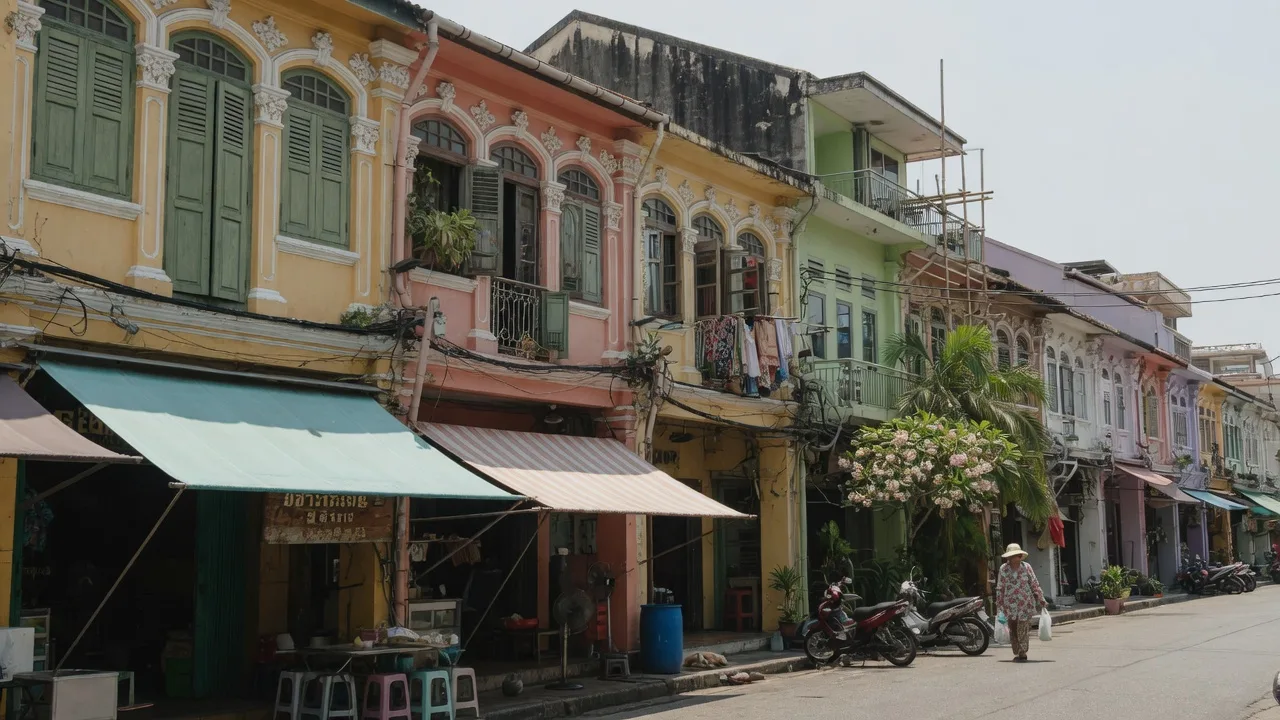
Most visitors never venture into Phuket Town, and they're missing something special. The Old Town district is a grid of streets lined with beautifully restored Sino-Portuguese shophouses — pastel-coloured, ornately decorated facades reflecting the island's centuries-old Chinese-European trading heritage. Tin mining brought Chinese migrants in the 19th century, and the architecture reflects a unique fusion of Chinese, Malay, and Portuguese colonial styles.
Key streets: Thalang Road (the most photogenic), Soi Romanee (colourful bars and cafes in restored buildings), and Phang Nga Road (street art and local eateries).
Sunday Walking Street: Lard Yai market on Thalang Road every Sunday 16:00–22:00 — local food, crafts, and live music in an atmospheric Old Town setting. One of Phuket's best experiences.
Old Town Food: Phuket Baba cuisine — a Chinese-Thai-Malay fusion — produces dishes you won't find elsewhere: mee hokkien (Hokkien noodles), oh-tao (oyster omelette), and loba (five-spice braised pork offal with tofu).
Big Buddha & Viewpoints
The 45-metre Big Buddha (Phra Phutta Ming Mongkol Eknakiri) sits at 400 metres altitude above Chalong, visible from much of southern Phuket. Made of white Burmese marble, it's a relatively recent addition (construction began 2004) but already an iconic landmark. The hilltop offers 360-degree views and a serene atmosphere.
Other viewpoints:
- Promthep Cape — The island's southern tip. Sunset here is a Phuket ritual, with crowds gathering nightly.
- Windmill Viewpoint (Naiharn) — Sweeping Andaman views near the southern tip, less crowded than Promthep.
- Rang Hill (Khao Rang) — Overlooking Phuket Town, with restaurants and a pleasant park.
Diving & Snorkelling
Phuket is the main gateway to some of Thailand's finest dive sites:
- Similan Islands — Thailand's premier diving destination, a national park 70km northwest of Phuket. Crystal visibility (20–30m), manta rays, whale sharks, and pristine coral gardens. Open November–May only. Day trips possible but liveaboards (2–5 days) are recommended.
- Phi Phi Islands — Excellent snorkelling and diving, with leopard sharks at Shark Point.
- King Cruiser Wreck — A passenger ferry that sank in 1997, now an artificial reef teeming with life at 12–32 metres.
- Racha Islands (Raya) — Clear, calm waters ideal for beginners and snorkellers. 45 minutes by speedboat.
PADI Open Water certification at Phuket dive shops: 12,000–15,000 baht (£275–340) for a 3–4 day course.
Day Trips
- Phang Nga Bay — The Andaman's most iconic seascape. Towering karst formations rising from emerald water, sea caves, and James Bond Island (Ko Tapu). Tours by long-tail boat, speedboat, or kayak.
- Phi Phi Islands — Day-trip by speedboat (1–1.5 hours). Maya Bay (reopened with visitor caps), Monkey Beach, and snorkelling stops.
- James Bond Island — Part of Phang Nga Bay tours. The distinctive nail-shaped islet from The Man with the Golden Gun.
- Khao Phra Thaeo National Park — Phuket's last lowland rainforest, in the island's northeast. Bang Pae and Ton Sai waterfalls, the Gibbon Rehabilitation Project (ethically managed), and easy nature trails.
Nightlife
Bangla Road, Patong
Phuket's notorious party strip — a pedestrianised road of bars, clubs, and neon that comes alive after dark. It is loud, chaotic, and very much a tourist spectacle. Go-go bars, beer bars, live music venues, and major nightclubs (Illuzion, Tiger Disco) line both sides. The atmosphere is festive rather than threatening, though the usual tourist precautions apply.
Beyond Bangla
- Boat Avenue, Cherng Talay — Upscale night market and bar area near Bang Tao
- Phuket Old Town — Craft cocktail bars on Soi Romanee and Thalang Road
- Catch Beach Club (Bang Tao) — Beachfront club with DJs and cocktails
- Ska Bar (Kata) — Live reggae, cheap drinks, and a mixed backpacker/local crowd
Practical Tips
- Getting There: Phuket International Airport (HKT) receives direct flights from the UK (seasonal), Middle East hubs, Singapore, KL, and all Thai domestic airports. From Bangkok: 1h20m, from ฿1,200.
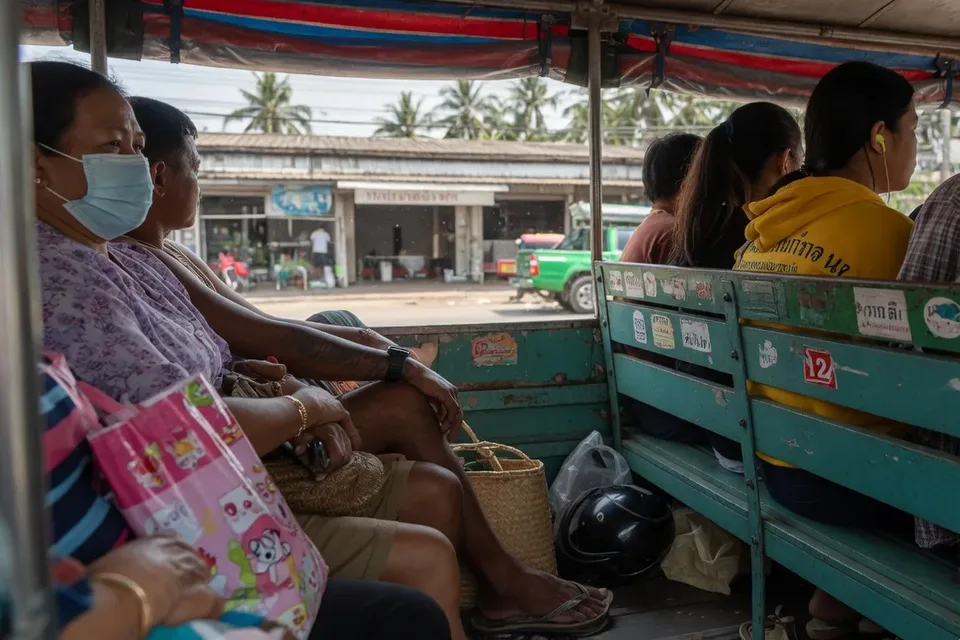
- Getting Around: Phuket has notoriously poor public transport. Options: Grab (the best), songthaew (beach-to-town buses, 30–50 baht), motorbike rental (250–350 baht/day, dangerous roads), or private car rental.
- Monsoon Season: May–October brings the southwest monsoon. West-coast beaches can have dangerous undertows — red flags mean no swimming. Some dive sites close. A packable rain jacket earns its keep more than a fourth pair of shorts. Prices drop 30–50% and the island is far less crowded.
- Costs: Phuket is one of Thailand's most expensive destinations. Budget 30–50% more than mainland Thailand for accommodation, dining, and transport.
- Scams: Jet-ski damage scams (operators claim you damaged the equipment). Avoid jet-ski hire, or photograph everything beforehand.