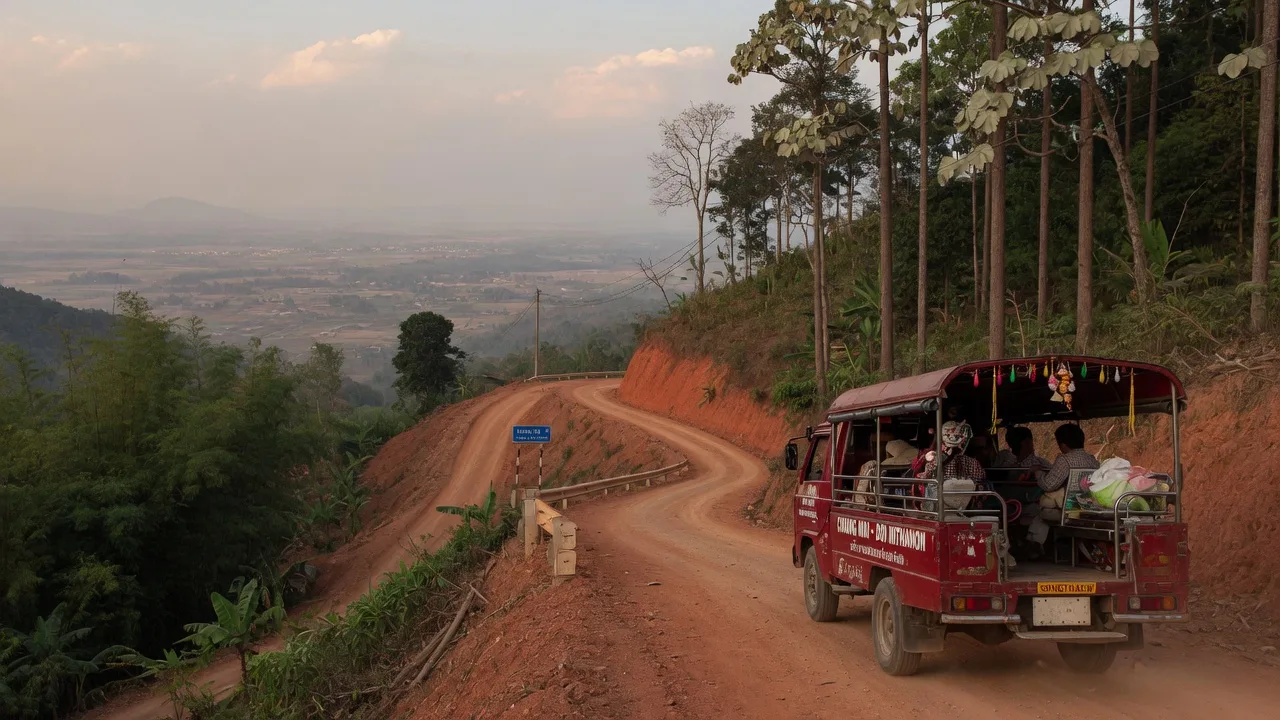
Thailand's remarkable diversity becomes clearer when you understand its regions. Each of the six major geographical areas has its own landscape, climate, cuisine, dialect, and cultural personality — so much so that Thais themselves often identify more strongly with their region than with the nation as a whole. A northern Thai from Chiang Mai and a southern Thai from Hat Yai may share a passport but inhabit quite different culinary, linguistic, and cultural worlds.
Central Thailand (ภาคกลาง)
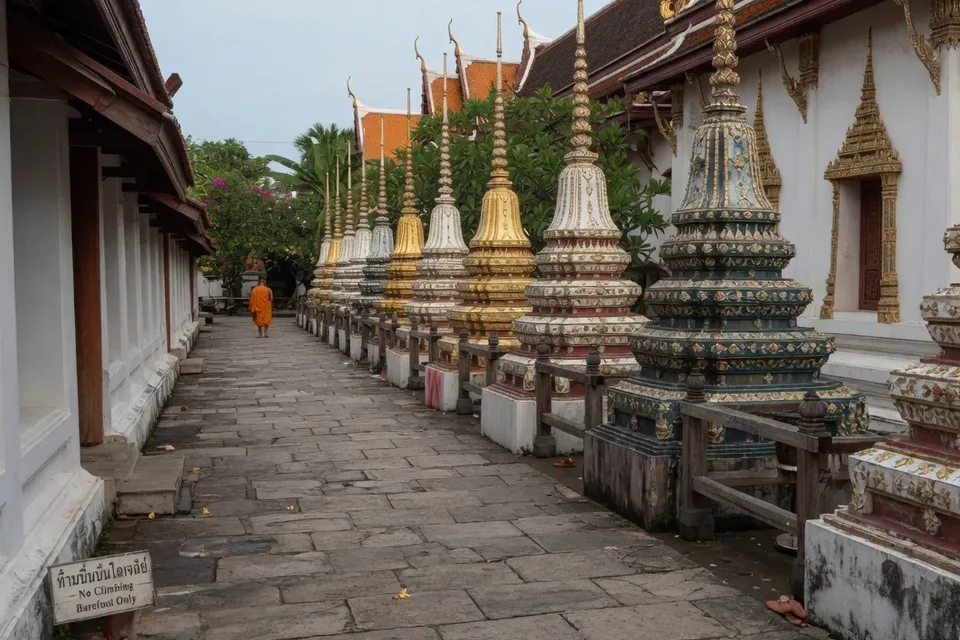
Defining Character: The heartland — flat, fertile, and utterly dominated by Bangkok.
The Central Plains are the economic and political engine of the nation, centred on the vast floodplain of the Chao Phraya River. This is Thailand's rice bowl, an endless patchwork of paddy fields, canals (khlongs), orchards, and fish ponds that has sustained civilisation here for centuries.
Bangkok — officially Krung Thep Maha Nakhon — is the overwhelming centrepiece. With over 10 million people in its metropolitan area, it is a primate city in every sense: the seat of government, the financial centre, the cultural capital, and the gateway through which nearly all international visitors arrive. It's a city of contradictions — gleaming skyscrapers overlook wooden houses on stilts along canals; Michelin-starred restaurants sit adjacent to street carts serving 40-baht pad Thai.
Beyond Bangkok, the Central region includes:
- Ayutthaya — The magnificent ruined capital of the Siamese kingdom (1351–1767), a UNESCO World Heritage Site just 80km north of Bangkok.
- Kanchanaburi — Home to the River Kwai, the Death Railway, and Erawan National Park with its seven-tiered waterfall.
- Nakhon Pathom — Site of Phra Pathom Chedi, the world's tallest Buddhist monument at 120.5 metres.
- Lopburi — The "Monkey City" with Khmer-era ruins and thousands of resident macaques.
- Samut Songkhram — The Maeklong Railway Market, where vendors whisk away their stalls eight times daily as a train passes through.
Climate: Hot and humid year-round. The rainy season (June–October) brings flooding to Bangkok's lower-lying areas. The cool season (November–February) offers the most comfortable weather.
Cuisine: Central Thai food is what the world knows as "Thai food" — the balanced interplay of sweet, sour, salty, and spicy. Signature dishes include pad Thai, tom yum goong, massaman curry, som tam (adopted from Isan), and khao man gai (chicken rice).
Northern Thailand (ภาคเหนือ)
Defining Character: Mountains, mist, temples, and teak — a cooler, quieter, distinctly Lanna culture.
Northern Thailand is defined by the mountain ranges of the Thai highlands, the westernmost fingers of the Himalayas. Here, the landscape shifts dramatically from the flat central plains to forested ridges, terraced hillsides, and narrow river valleys. The highest point in Thailand, Doi Inthanon (2,565m), stands in this region, and in the cool season its summit can see frost — a surreal sight in tropical Southeast Asia.
The north is the historic territory of the Lanna Kingdom (1292–1775), a polity centred on Chiang Mai that was culturally distinct from the Siamese kingdoms to the south. Lanna culture persists today in architecture (the distinctive tiered viharn temples), cuisine (sticky rice, khao soi, sausages), language (Kham Mueang), and a notably gentle, reserved social style that contrasts with Bangkok's hustle.
Key Destinations:
- Chiang Mai — Thailand's second city and cultural capital of the north. 300+ temples, a UNESCO-tentative old city wall, night bazaars, cooking schools, and gateway to hill-tribe trekking.
- Chiang Rai — The Golden Triangle, the White Temple (Wat Rong Khun), and the northernmost border town of Mae Sai.
- Pai — A backpacker and bohemian favourite in a mountain valley, known for hot springs, waterfalls, and a relaxed vibe.
- Mae Hong Son — Remote, mountainous, and culturally closer to Myanmar than Bangkok. Long-neck Karen villages and stunning valley scenery.
- Sukhothai — Ruins of the first Thai kingdom (1238–1438), a UNESCO World Heritage Site with serene Buddha images and reflecting pools.
- Lampang — Horse-drawn carriages, teak buildings, and Wat Phra That Lampang Luang, one of the finest wooden temples in the country.
Climate: Cooler than the rest of Thailand. The cool season (November–February) brings temperatures as low as 5–10°C in the mountains, making a light jacket essential — a genuine novelty in tropical Thailand. The hot season is less brutal than Bangkok, and the rainy season brings lush, green landscapes.
Hill Tribes: The northern mountains are home to diverse hill-tribe communities — Karen, Hmong, Akha, Lisu, Lahu, and Yao peoples — each with distinct languages, clothing, and traditions. Responsible trekking and village visits are a significant draw, though ethical tourism practices are essential.
Northeastern Thailand — Isan (ภาคอีสาน)
Defining Character: The vast, often-overlooked plateau — the soul of Thai culture, Lao-influenced, and fiercely proud.
Isan (อีสาน) is Thailand's largest region by area and population, occupying the great Khorat Plateau bounded by the Mekong River to the north and east and the Phetchabun Mountains to the west. It is also the poorest region, historically neglected by Bangkok, and the source of much of the capital's migrant labour force.
Yet Isan is arguably where the most authentic Thai experiences are found. This is where som tam (green papaya salad) originated, where mor lam music fills the night air, where sticky rice is the staple (not jasmine rice), and where the influence of Laos — linguistic, culinary, and cultural — is everywhere.
Key Destinations:
- Nakhon Ratchasima (Korat) — The gateway to Isan and home to Khao Yai National Park, Thailand's first and most-visited national park.
- Udon Thani — Access point for Ban Chiang, a UNESCO-listed Bronze Age archaeological site (3600 BCE).
- Khon Kaen — Isan's university city and commercial hub, with excellent street food scenes.
- Ubon Ratchathani — The Candle Festival (Khao Phansa) and access to Pha Taem National Park's cliff paintings.
- Nong Khai — Mekong riverside town with surreal Sala Kaew Ku sculpture park and easy crossings to Vientiane, Laos.
- Buriram — Chang International Circuit (MotoGP) and the stunning Khmer temple of Phanom Rung.
- Surin — The annual Elephant Festival and silk-weaving villages.
Climate: Isan is Thailand's most extreme: scorching hot in April (40°C+), drenched during the monsoon, and genuinely cool in December–January. The red dust of the dry season and the green rice paddies of the wet season define the visual rhythm of the year.
Cuisine: Isan food is Thailand's most distinctive regional cuisine. It is intensely flavoured — searingly spicy, aggressively sour, boldly fermented. Key dishes: som tam (papaya salad), larb (minced meat salad), gai yang (grilled chicken), nam tok (waterfall beef salad), sai krok Isan (fermented sausage), and pla ra (fermented fish paste). Everything is eaten with sticky rice, rolled into balls by hand.
Eastern Seaboard (ภาคตะวันออก)
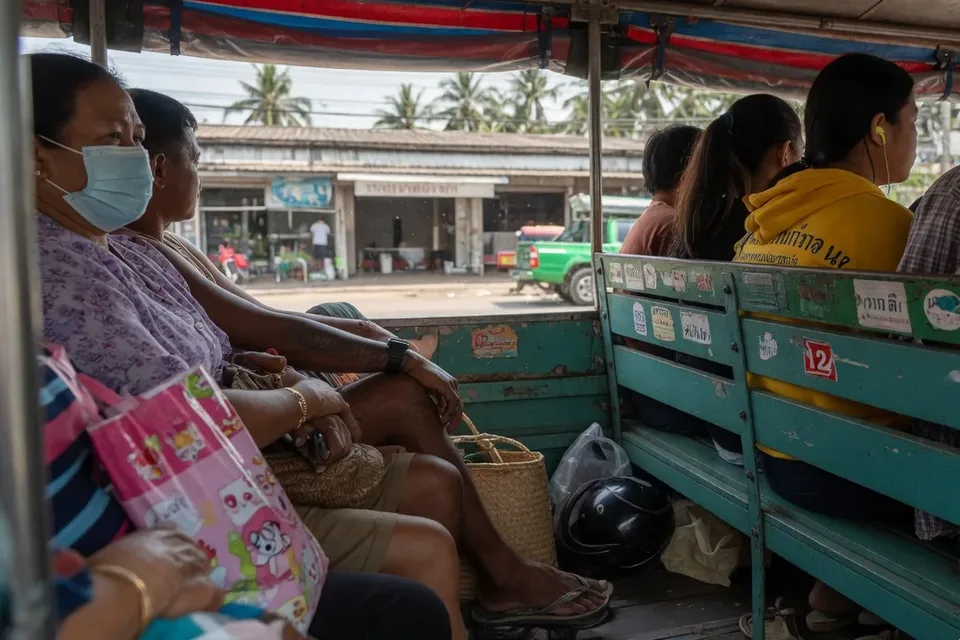
Defining Character: Industry meets beach tourism — Thailand's economic corridor and resort coast.
The Eastern Seaboard is a compact region along the Gulf of Thailand east of Bangkok, encompassing the industrial heartland around Rayong and Chonburi and the resort islands offshore. It's a region of contrasts: deep-water ports and petrochemical plants coexist with white-sand beaches and coral islands.
Key Destinations:
- Pattaya — Thailand's most famous (and infamous) beach resort, 150km from Bangkok. Once a fishing village, now a sprawling city of nightlife, golf courses, water parks, and family resorts. Much-improved in recent years.
- Ko Samet — A popular weekend escape for Bangkok residents, with white-sand beaches and relatively calm waters.
- Ko Chang — Thailand's second-largest island (after Phuket), near the Cambodian border. Mountainous, forested, and less developed than the southern islands.
- Trat — Quiet provincial capital and jumping-off point for Ko Chang, Ko Mak, and Ko Kood (one of Thailand's most beautiful and least-visited islands).
- Chanthaburi — Gemstone capital of Thailand, famous for rubies and sapphires, with a charming riverside old town and excellent tropical fruit.
Southern Thailand — Andaman Coast (ภาคใต้ฝั่งอันดามัน)
Defining Character: Dramatic limestone seascapes, world-class diving, and the images that define Thailand in the global imagination.
The Andaman coast, facing the Indian Ocean on Thailand's western flank, is perhaps the most visually spectacular region in Southeast Asia. Towering karst formations, emerald lagoons, mangrove-fringed shores, and coral-rich waters make this one of the world's great coastal landscapes.
Key Destinations:
- Phuket — Thailand's largest island and premier resort destination. A full ecosystem of beaches, nightlife, luxury resorts, cultural attractions, and a vibrant Old Town with Sino-Portuguese architecture.
- Krabi — The quieter alternative to Phuket, with Railay Beach (accessible only by boat), Ao Nang, and four-island tours through limestone archipelagos.
- Phi Phi Islands — Ko Phi Phi Don and the uninhabited Ko Phi Phi Leh (Maya Bay, made famous by The Beach). Stunning but heavily visited.
- Khao Lak — A quieter stretch of coast north of Phuket, gateway to the Similan Islands (world-class diving) and Sri Phang Nga National Park.
- Ko Lanta — A laid-back island south of Krabi with long beaches, minimal nightlife, and a thriving backpacker and family scene.
- Phang Nga Bay — James Bond Island, sea caves, and the extraordinary "hongs" (collapsed cave lagoons) accessible by kayak.
Climate: The Andaman coast has a pronounced monsoon season. The best weather runs from November to April (dry, calm seas, clear skies). May to October brings the southwest monsoon with significant rainfall, rough seas, and some island closures. However, this is also when prices drop dramatically and crowds thin.
Southern Thailand — Gulf Coast (ภาคใต้ฝั่งอ่าวไทย)
Defining Character: Coconut-palm islands, full moon parties, and a different monsoon calendar.
The Gulf coast, on the eastern side of the southern peninsula, has a distinct character and — critically for travellers — a different weather pattern from the Andaman side. When the Andaman coast is drenched (May–October), the Gulf coast is often still enjoying good weather. Its wet season runs from October to December.
Key Destinations:
- Koh Samui — The palm-fringed island that started it all. Now a mature resort destination with its own airport, luxury villas, and Chaweng Beach. The Big Buddha and the ladyboy cabaret are iconic.
- Koh Phangan — Next door to Samui, famous worldwide for the Full Moon Party at Haad Rin. Beyond the party scene, the island has quiet northern beaches and a yoga/wellness community.
- Koh Tao — The diving island. One of the cheapest places on earth to get PADI certified, with excellent coral sites and whale shark sightings.
- Surat Thani — The mainland transit hub for the Gulf islands, with Khao Sok National Park (ancient rainforest and Cheow Lan Lake) nearby.
- Chumphon — The gateway to Koh Tao and the start of the "real" south.
- Nakhon Si Thammarat — An ancient cultural centre with one of the most important Buddhist stupas in the country (Wat Phra Mahathat).
The Deep South
Below Nakhon Si Thammarat lies Thailand's Malay-Muslim borderland — the provinces of Pattani, Yala, and Narathiwat. This is a culturally distinct area where Malay (Jawi) is the first language, Islam is the majority religion, and a long-running separatist insurgency has created security concerns. Most foreign governments advise against travel to these three provinces. The rest of the south, including Songkhla and Hat Yai, is generally safe.