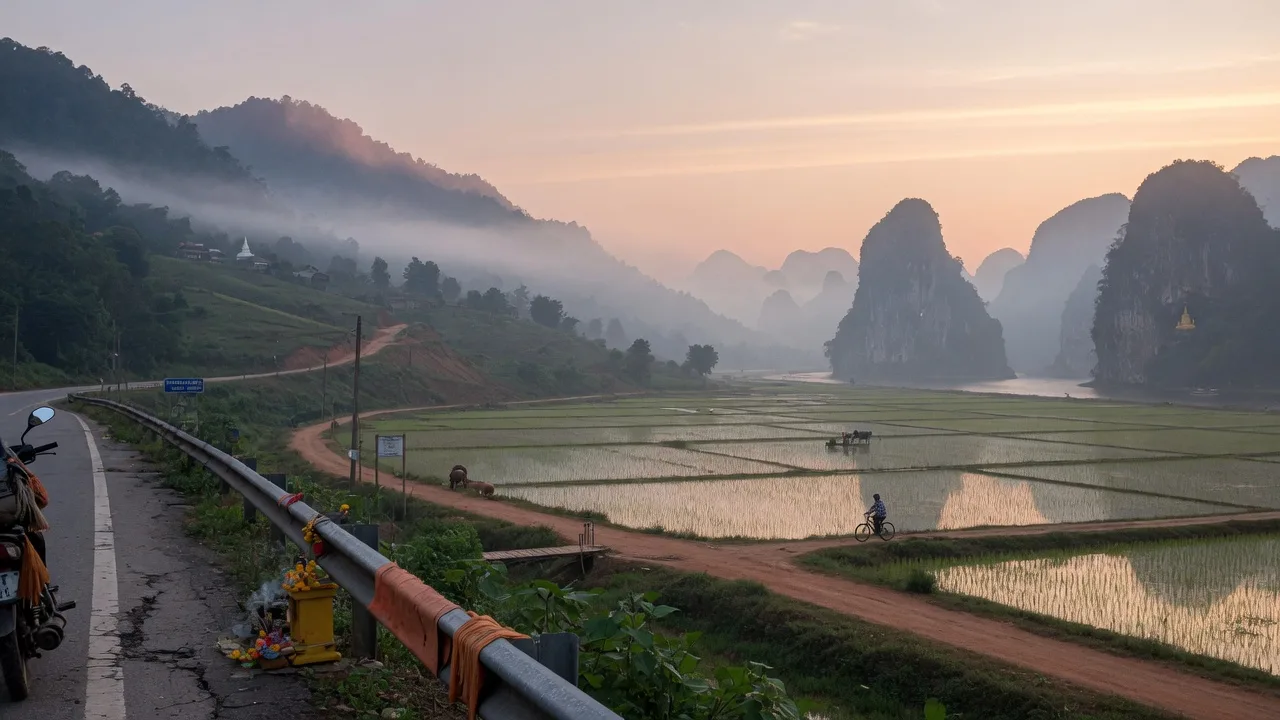
Thailand — known to its people as Prathet Thai (ประเทศไทย), meaning "Land of the Free" — is a Southeast Asian kingdom that has fascinated traders, travellers, and scholars for centuries. It sits at the heart of the Indochinese Peninsula, a geographical crossroads where the cultures of India, China, and the Malay world have mingled for millennia to create something utterly unique.
Geography & Position
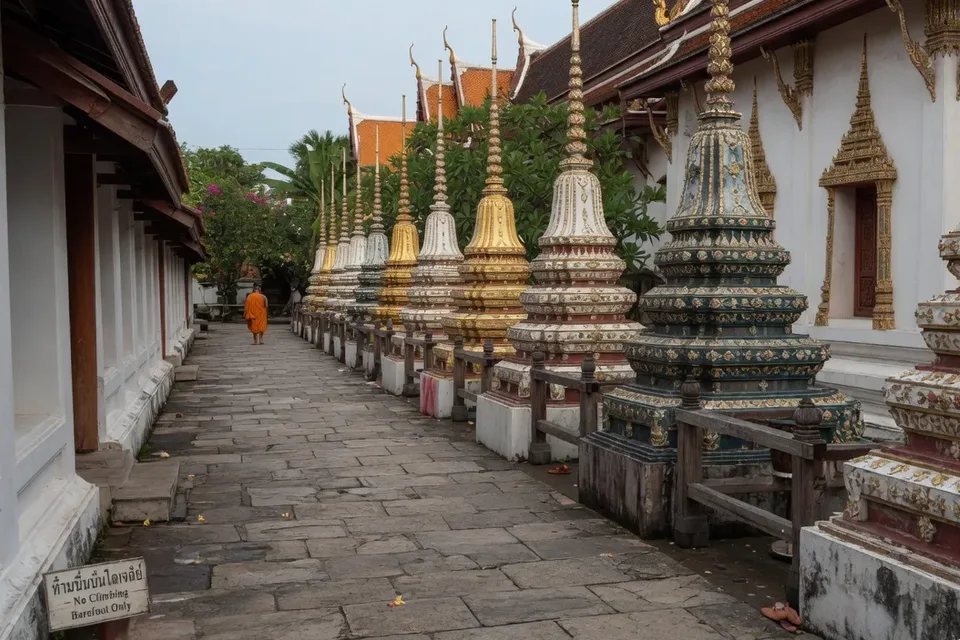
Thailand occupies 513,120 square kilometres of mainland Southeast Asia — roughly twice the size of the United Kingdom. The country's distinctive shape resembles an elephant's head in profile, with the trunk extending southward along the Malay Peninsula. It shares borders with Myanmar (Burma) to the west and northwest, Laos to the northeast, Cambodia to the southeast, and Malaysia to the south.
The country's geography divides naturally into six distinct regions:
- Central Plains: The flat, fertile rice bowl of the nation, dominated by the Chao Phraya River basin. Bangkok sits here.
- Northern Highlands: Rugged mountains reaching 2,565m at Doi Inthanon, Thailand's highest peak. Home to Chiang Mai and Chiang Rai.
- Northeastern Plateau (Isan): The vast Khorat Plateau, Thailand's largest and poorest region, with deep Lao cultural connections.
- Eastern Seaboard: The industrial corridor and beach resort coast including Pattaya and Ko Samet.
- Western Highlands: Dense forests and river valleys along the Myanmar border, including Kanchanaburi and the River Kwai.
- Southern Peninsula: The narrow isthmus stretching to Malaysia, flanked by the Andaman Sea (west) and the Gulf of Thailand (east). Islands, beaches, and rubber plantations.
Population & Demographics
Thailand's population of 71.8 million (2025 estimate) is predominantly ethnic Thai (approximately 75%), with significant Thai-Chinese (14%), Malay (3%), and various hill-tribe and minority populations. Bangkok, the capital, is home to over 10 million people in its metropolitan area — a primate city that dwarfs all others.
The country is remarkably homogeneous in religion: roughly 93% of the population practices Theravada Buddhism, which shapes daily life, architecture, calendar, cuisine, and social customs in ways that are immediately visible to every visitor. Islam is the second-largest religion (5%), concentrated in the deep south near the Malaysian border.
Language
Thai (ภาษาไทย, Phasa Thai) is the official language, a tonal language with five distinct tones that can alter meaning dramatically. The Thai script, derived from ancient Khmer, has 44 consonants, 15 vowel symbols, and 4 tone marks. English is widely understood in tourist areas, major cities, and the business community, but drops off quickly in rural areas and the northeast.
Regional dialects are significant: Kham Mueang (Northern Thai), Isan (essentially Lao), and Pak Tai (Southern Thai) are all distinct enough that speakers sometimes struggle to understand one another.
Economy
Thailand is Southeast Asia's second-largest economy (after Indonesia) with a GDP of approximately US$550 billion (2024). It has undergone one of the most remarkable economic transformations in modern history, rising from a low-income agrarian society to an upper-middle-income economy in a single generation.
Key economic sectors include:
- Tourism: Approximately 12–15% of GDP. Thailand is the most-visited country in Southeast Asia, welcoming 35–40 million visitors annually.
- Manufacturing & Exports: Automobiles (Thailand is the "Detroit of Asia"), electronics, processed food, rubber, textiles.
- Agriculture: Rice (Thailand is the world's second-largest rice exporter), rubber, sugar, cassava, tropical fruits.
- Services: Finance, real estate, healthcare (Thailand is a global medical tourism hub).
The Thai baht (THB) trades at approximately 44–46 to the British pound (2025). For UK visitors, this means extraordinary purchasing power: a plate of pad Thai from a street vendor costs 40–60 baht (roughly £1), a night in a comfortable hotel 800–2,000 baht (£18–45), and a domestic flight 1,500–3,000 baht (£34–68).
Government & Monarchy
Thailand is a constitutional monarchy. The reigning monarch, King Maha Vajiralongkorn (Rama X), ascended the throne in 2016 following the passing of his father, King Bhumibol Adulyadej (Rama IX), who reigned for 70 years and was deeply beloved by the Thai people.
The monarchy occupies a position of extraordinary reverence in Thai society. Lèse-majesté laws (Article 112 of the Criminal Code) make it illegal to defame, insult, or threaten the royal family, with penalties of up to 15 years' imprisonment. Visitors should exercise particular care in this regard — do not make disrespectful remarks about the monarchy, and always stand during the royal anthem played before cinema screenings and at certain public events.
Thailand's modern political history has been marked by periods of democratic governance interspersed with military coups — there have been 13 successful coups since 1932, when the absolute monarchy was replaced by constitutional government. The current constitution dates from 2017.
Climate
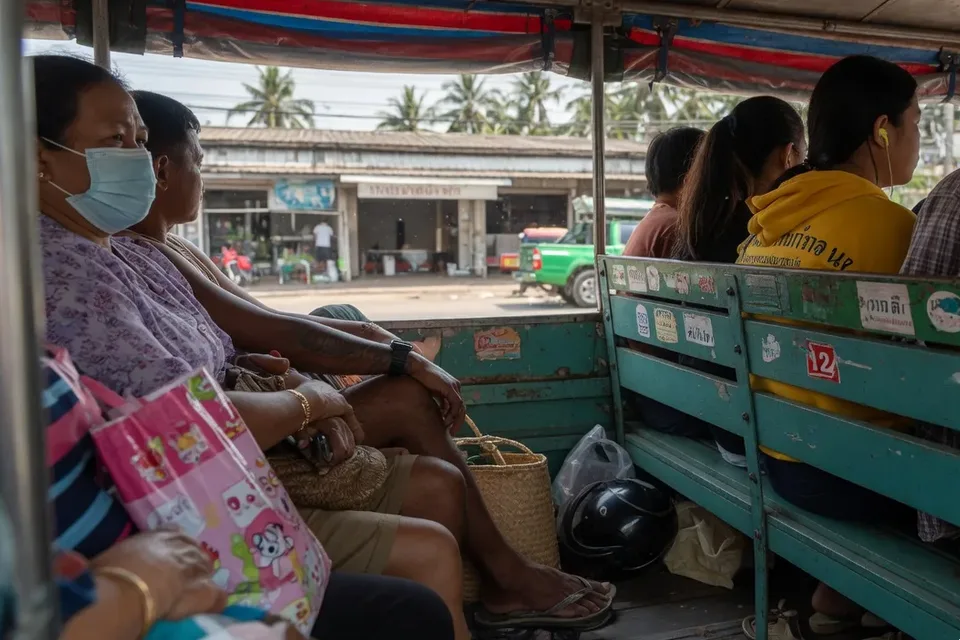
Thailand has a tropical climate with three broad seasons:
- Hot Season (March–May): Temperatures of 35–40°C across most of the country. April is typically the hottest month.
- Rainy Season (June–October): The southwest monsoon brings heavy afternoon showers, high humidity, and lush green landscapes. The north and northeast are wettest in August–September; the south's west coast (Phuket, Krabi) peaks in September.
- Cool Season (November–February): The most popular time to visit. Temperatures of 20–32°C, low humidity, and clear skies. The north can drop to 10°C at altitude.
Southern Thailand has a modified pattern, with the Andaman coast receiving rain from May to November and the Gulf coast (Koh Samui, Koh Phangan) wettest from October to December.
Currency & Costs
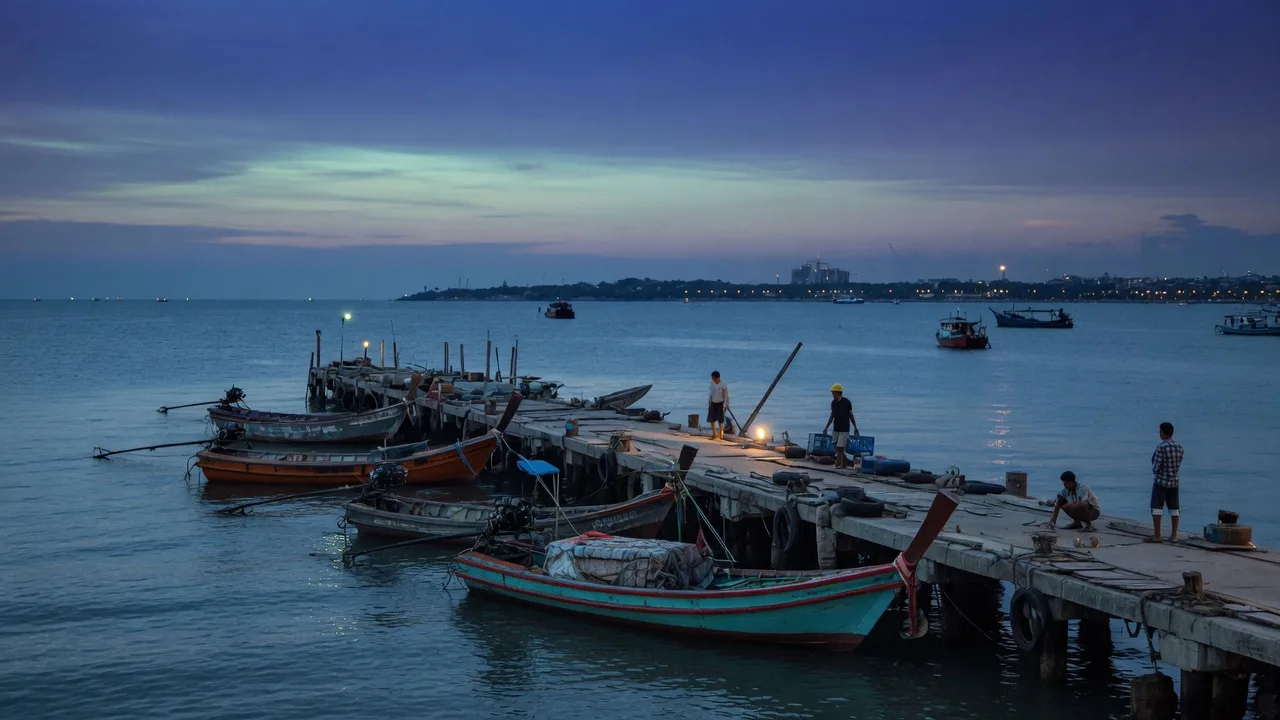
The Thai baht (฿ / THB) is the national currency. Notes come in denominations of 20, 50, 100, 500, and 1,000 baht; coins in 1, 2, 5, and 10 baht.
Thailand remains one of the world's best-value destinations. Daily budget ranges for visitors:
| Category | Budget Traveller | Mid-Range | Luxury |
|---|---|---|---|
| Accommodation | ฿300–800 (£7–18) | ฿1,500–4,000 (£34–90) | ฿8,000+ (£180+) |
| Food | ฿200–400 (£5–9) | ฿500–1,200 (£11–27) | ฿2,000+ (£45+) |
| Transport | ฿100–300 (£2–7) | ฿500–1,500 (£11–34) | ฿2,000+ (£45+) |
| Activities | ฿200–500 (£5–11) | ฿500–2,000 (£11–45) | ฿3,000+ (£68+) |
ATMs are ubiquitous but charge a flat 220 baht (£5) fee per withdrawal for foreign cards. Credit cards are accepted at hotels, large restaurants, and shopping malls, but cash remains essential for markets, small eateries, and rural areas.
Religion & Spirituality
Theravada Buddhism isn't merely a religion in Thailand — it's the operating system of society. There are approximately 40,000 Buddhist temples (wat) across the country, and the vast majority of Thai men ordain as monks for at least a short period during their lives, typically during the rainy season retreat (Phansa).
The Buddhist calendar governs public holidays and festivals. Monks collect alms each morning at dawn, a practice unchanged for centuries. Merit-making (tham bun) — through donations to temples, feeding monks, releasing captive animals, or meditation — is a central feature of daily life.
Spirit worship (animism) coexists comfortably with Buddhism. The san phra phum (spirit houses) that stand outside nearly every building in Thailand — from luxury hotels to humble shophouses — are offerings to the spirits of the land, maintained with daily gifts of incense, flowers, and food.
Essential Visitor Information
- Visa: UK citizens receive a 60-day visa exemption on arrival (as of 2024). Extensions of 30 days available at immigration offices.
- Electricity: 220V, 50Hz. Plug types A, B, C, and O (two-pin round or flat). UK adaptors widely available.
- Driving: Left-hand traffic (same as UK). International driving permit recommended.
- Tipping: Not traditionally expected, but increasingly common in tourist areas. Rounding up restaurant bills is appreciated. Hotel porters: 20–50 baht.
- Water: Do not drink tap water. Bottled water costs 7–15 baht and is sold everywhere.
- Emergency Numbers: Tourist police: 1155. General emergency: 191. Ambulance: 1669.
- Internet: Excellent 4G/5G coverage. Tourist SIM cards from AIS, DTAC, or TrueMove available at airports for 200–600 baht (7–30 days of data).